A.K. Blog

Our website is best viewed on a browser other than Internet Explorer. We recommend FireFox, which is a free download available here.

Primitive Cooking Workshop

How long can you survive without food? We all know how  important food is to sustain energy in daily life.  If you ever find yourself living in the natural world or stuck in the woods you may want to know how to provide a well cooked meal. Join us for this adventure in the culinary arts of primitive cooking,  your taste buds will thank you.

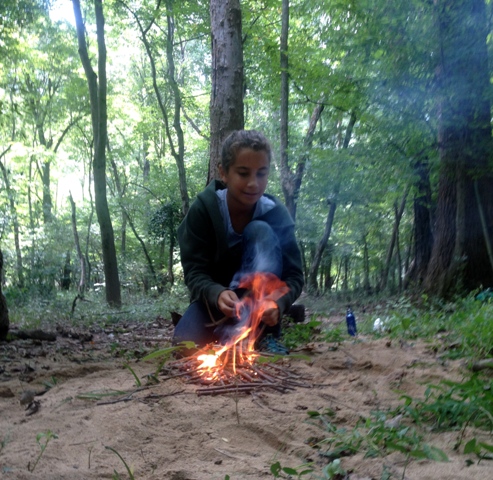
We will cook a variety of wild and natural foods without using modern store-bought utensils.  Learn tricks and techniques of working with a cooking fire, clay pots, stone  griddles, gourds, sticks and cordage. We will learn how to boil, bake, steam, roast and fry foods. Two gourmet meals WILL result!

Date: Saturday, October 30th

Time: 9am-5pm

Cost: $75 per person covers tuition, materials and foods.

Location: TBA – Greenbelt MD or Mitchellville MD

Instructor: Jeff Gottlieb

Registration form

Registration deadline is one week prior to the start of this program.

Monthly Primitive Skills gatherings

Keep an eye on our Calendar.  Starting in the Fall of 2010 Ancestral Knowledge will begin hosting monthly Tracking Club and Primitive Skills Club.  We have set aside one day a month to host these meetings.  Tracking club will meet one Sunday from 9am-12pm and the skills club will meet Sundays from 1pm-4pm

The idea being not to teach but guide and assist you in skills you have already begun and have been practicing. Bring the skills that you have hit a wall on or just can’t figure out or just come for the camaraderie.

In the old days we would have had support in our tribe to excel in these skills.  Now we find ourselves alone and frustrated.  Let’s all come together, we all have something to offer each other.  Let our community form and grow in a good way.

We will not charge any money for this but we will accept $5-$10 tax deductible donations to help pay for the facility and our time.

Spring 2010 Mentoring Programs

This spring is really hopping with activity.  Our first ever Rites of Passage program is under way and we are in our 4th year of our seasonal Home School Naturalist program.

I am especially excited about the Rites of Passage program for youth ages 11-17.  Working with the older kids gives me the opportunity to guide them to a more comprehensive understanding of who they are as beings that walk and share the earth.  This time spent working the advanced skills of survival and the deeper research of the environment will help each individual answer their own questions about life and the cycles within as it prepares them for adulthood and the responsibilities that come with it.

So far we have met 3 times for the Rites of Passage program.  Already they have each produced enough natural fiber to construct and set two primitive traps, begun their research the mammals that live in this region, and collected the materials to begin making primitive bows and arrows.   These kids are very inspiring with their ability to stay focused and complete these tasks that are foreign to them.

Our Home School Naturalist program is really rolling.  We offer this program in two locations, Northern VA and Greenbelt MD.  This program is designed for youth ages 8-12 with the intent to inspire outdoor time and the appreciation for camping and nature studies.  This program is based around basic outdoor skills including; animal tracking and identifications, plant and tree identification,  the study of bird songs, wilderness awareness, and wilderness survival.  A typical day includes wandering the woods in search of adventure and discovery while learning the ebb and flow of nature.  Each day is packed full of games and exercises that promote comfort and security in natural places while embedding life lessons that will never be forgotten.

Ancestral Knowledge Battles Against Nature Deficit Disorder

Our main goal here at Ancestral Knowledge is to bring the inner-city youth back to nature through programs like the ancient skills demonstrations we have held at the Washington D.C.’s Capital Hill Day School and other youth focused programs.  In addition, we help maintain connections to nature with adults through our partnership with the Wilderness Survival program a Georgetown University.  And, have provided experiences to adults who have lost touch with their childhood memories of the outdoors and want to regain that healthy relationship. Our youth and adult programs are helping reduce Nature Deficit Disorder.  We have seen some of the results with the kids we have continual contact with and it is encouraging.

Nature Deficit Disorder?

Almost two years ago the National Conservation Training Center in Shepherdstown, West Virginia, hosted the National Dialogue on Children and Nature Conference. The focus of the conference was on saving our children from nature deficit disorder. You may have heard of this phrase before, it is the title of a book by Richard Louv, Last Child in the Woods: Saving Our Children from Nature Deficit Disorder.  Louv in his acclaimed book argues that today’s children have lost their connection to the natural world because of the addictive character that the modern world of television, computers and video games has on our children.

Some of the actions, solutions, and opportunities that the conference participants suggested are still useful, but we have not seen much progress in making them reality other than limited research on the benefits of exposing children to nature.

Health-related actions: Conduct research on the benefits of exposing children to nature instead of pharmaceuticals; incorporate the health benefits of nature into medical and nursing school curricula; and encourage pediatricians to prescribe nature time for stress reduction and as an antidote to child obesity.

Education actions: Assure that every school utilizes nearby; offer students in-nature time during teacher in-service days; create new partnerships between schools, farms, ranches and public parks; establish a national Nature Bee; and ask each student to be personally responsible for one living thing.

Societal actions: Create a “Take a Child to Nature” day; persuade AARP to create a nature-mentor program; establish a child-nature impact assessment for all built environments; and engage religious organizations.

Locally, AK has been fruitful in establishing at least one of the possible solutions–ancient skills educational and nature programs–to local schools and universities. Parents can have a voice too by calling teachers, school boards, and congressional representatives to encourage more funding and focus on getting our children out in nature and, of course, signing up their children for outdoor experiences.

Let’s work together for a better future.

Self Bow Building Workshop

Days 1-3

The bow building workshop is well underway.  This year the workshop is a 5 days long program held over two weekends .  This has proven to be a more relaxed time schedule so participants at any skill level of woodworking can complete a bow.

The average bow maker can complete a bow, without being rushed, in 3-5 days.  My feeling about bow making is, if you can make the bow making experience last, why not take as long as you can to learn the characteristics of each bow you create.

Today I had the opportunity to finish a bow that I have been a little here and there over the past several months.  While everyone was in the early stages of work on their bows I was able to spend some time finishing one of mine.  The Osage Orange bow has a very snaky and wavy profile, which demands special attention to detail.  The wait was well worth it in several ways.   Now I have a wonderfully tillered bow that is a smooth shooter and is very beautiful profile.

Each of the participants during this program are working on a hickory bow.  Over this first weekend they have each taken their stave down to a growth ring, laid out the bow design, and have begun the floor tillering process.  They are all starting to bend quite well and each of them are moving along at a very productive pace.  In the end they should each have great shooting bows.  I look forward to seeing them each through to completion.  One of my favorite things is when we all get to shoot our bows together on the last day of the workshop.

To see more pictures of our bow making and other adult workshops click here.