How our Ancient Traditions can help us Today

While most people may think of primitive skills/bushcraft in purely practical terms (e.g. making a shelter to stay dry, firemaking to cook and keep warm), an often overlooked aspect of learning and practicing these skills, is the community and sense of empowerment that comes from being in nature.
When I began working at the Wood Wise summer camps, the bulk of my nature experiences, like most people from cities and suburbia, came from yearly camping trips with my family. I remember our tried and true method of making a fire: drive to the camp site’s store, buy firewood and then douse it in lighter fluid and light in the fire pit. Fire in addition to being one of humanity’s earliest and most important discoveries is also a community builder. Most can attest to the comradery and familiarity that a camp fire brings.

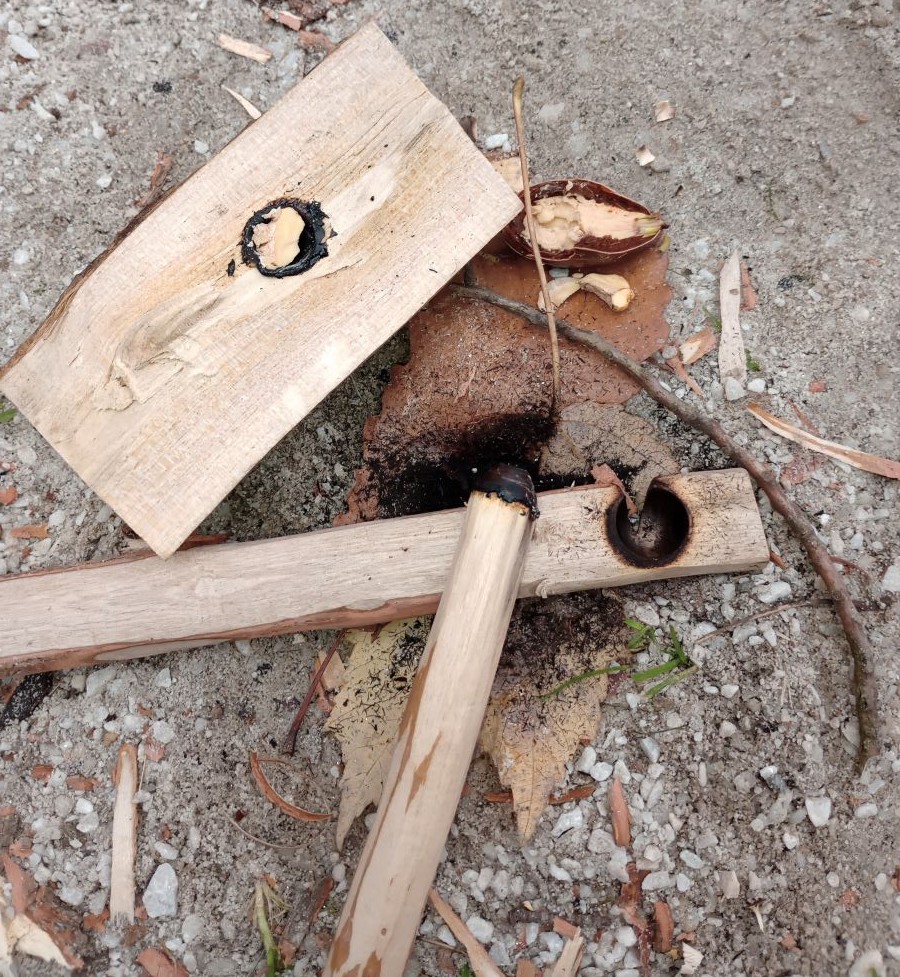
When I started working at Wood Wise Camps, I was introduced to Bow Drill:
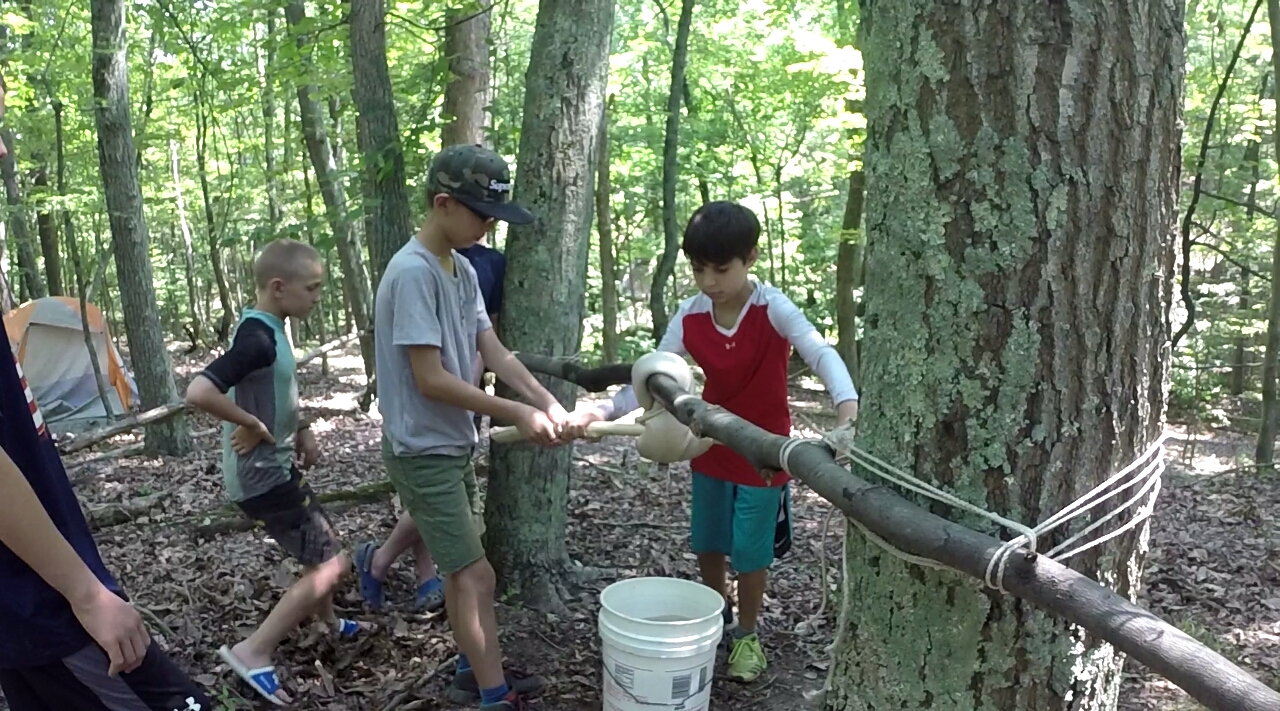
Bow Drill is one of the oldest fire making tools, consisting of a wooden bow, tied with some form of cordage, a hearth board, a handhold, and a spindle. It has been used by people from North America to Egypt. The Egyptian style of Bow Drill has been used since around 2000 BCE, The Egyptian bow drill differs from other styles by tying the spindle to the string using a clove hitch and then wrapping the excess cord around it.

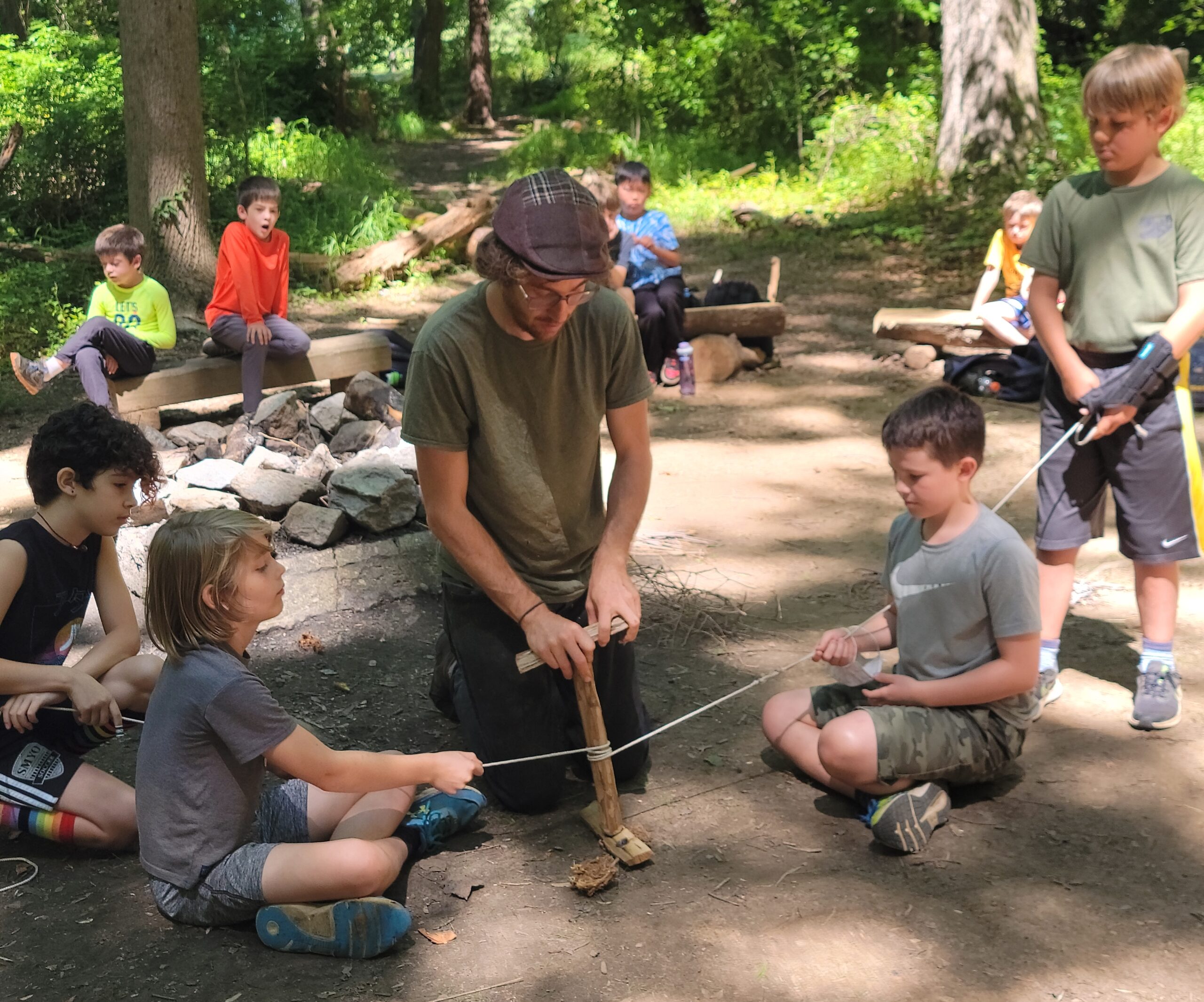
One of the activities we did at camp, was group bow drill. Seeing a group of around six people, pushing and pulling a rope, easily working in tandem to reach our goal of fire, reminded me of something I think we’ve lost in modern society, community. For most of our history, people lived in smaller, more connected communities with every person having a role to play in it. I think by practicing these skills and getting back to nature, we not only gain survival skills but a direct link to how our ancestors lived.


I would consider myself to be a fairly shy and withdrawn person, but being able to connect with this small pocket of community and to act as a Mentor with these skills, has grown my confidence. I have seen this same transformation take place in the kids I’ve taught, children have come to programs shy and timid but upon getting into the woods, building debris shelters and experiencing nature, they come alive.

Today, it’s important to engage in a community that encourages cooperation and sharing of ideas and technique, especially as trends show every subsequent generation growing more isolated than the last. I can not think of a better way to connect with others and your environment than to learn and practice the skills that our ancestors used to survive and thrive.
By Ben Kamm (Field Instructor in Training)
Awareness and returning to “baseline”

What does the word awareness bring to mind for most people?

Maybe…Time management skills, a good sense of social etiquette, quick reaction time while driving?

The demands of our busy lives may give us a different idea of the “aware” human, but try to think of instinct, on more animal terms. In the forest, we have a chance to practice these skills away from the disruptions of other humans and the busy, modern world, and to carry them out into that world with us. Listening to the subtle cues in the language of the forest and creatures can help restore our sensitivity and perception.

How do most humans move through the city?

We tend to look straight ahead, our vision fixed on our destination, walking with firm and quick steps in sensation muffling , foot compressing shoes.

When moving through nature, we can learn to roll our foot in a way that minimizes sound when we walk, feeling every obstacle before we have a chance to break it, “fox walking” through the woods. This is done best barefoot, or in thin soled shoes/moccasins but can be achieved in almost any footwear. If you’d like to try, start barefoot. Walk with relaxed, slightly bent knees. Place the blade of your foot upon the earth first, and roll towards the center, your heal landing last. This allows you to adjust your movement if you feel something like a rock or stick that could snap. Some find a kind of walking meditation in this exercise, and with continued use, it may start to come naturally to you. There is more intention in this way of walking, you may find that it forces you to observe the present rather than dwell in your thoughts.

Where do we tend to focus our gaze when navigating the city?

Most people tend to look straight ahead, as previously stated. They may miss things above or below them. People who have a sense of hyper-awareness may use a form of wide angle vision already, watching others from the corner of their eye, when their guard is high.  We can learn to open our vision, widening the boundaries of our sight, until we can watch all that is moving around us, versus one fixed point.

An exercise in “Wide Angle Vision”, or “Owl Eyes”:

Stand with your arms a bit wider than your body. Wiggle your fingers and stare straight ahead. Slowly bring your hands out as far as you can, until the motion of your fingers is on the very edge of your range of vision. Keep looking straight ahead while watching this motion. This can make it easier to slip into Wide Angle Vision, with practice.

How do we listen, vs the animals we observe?

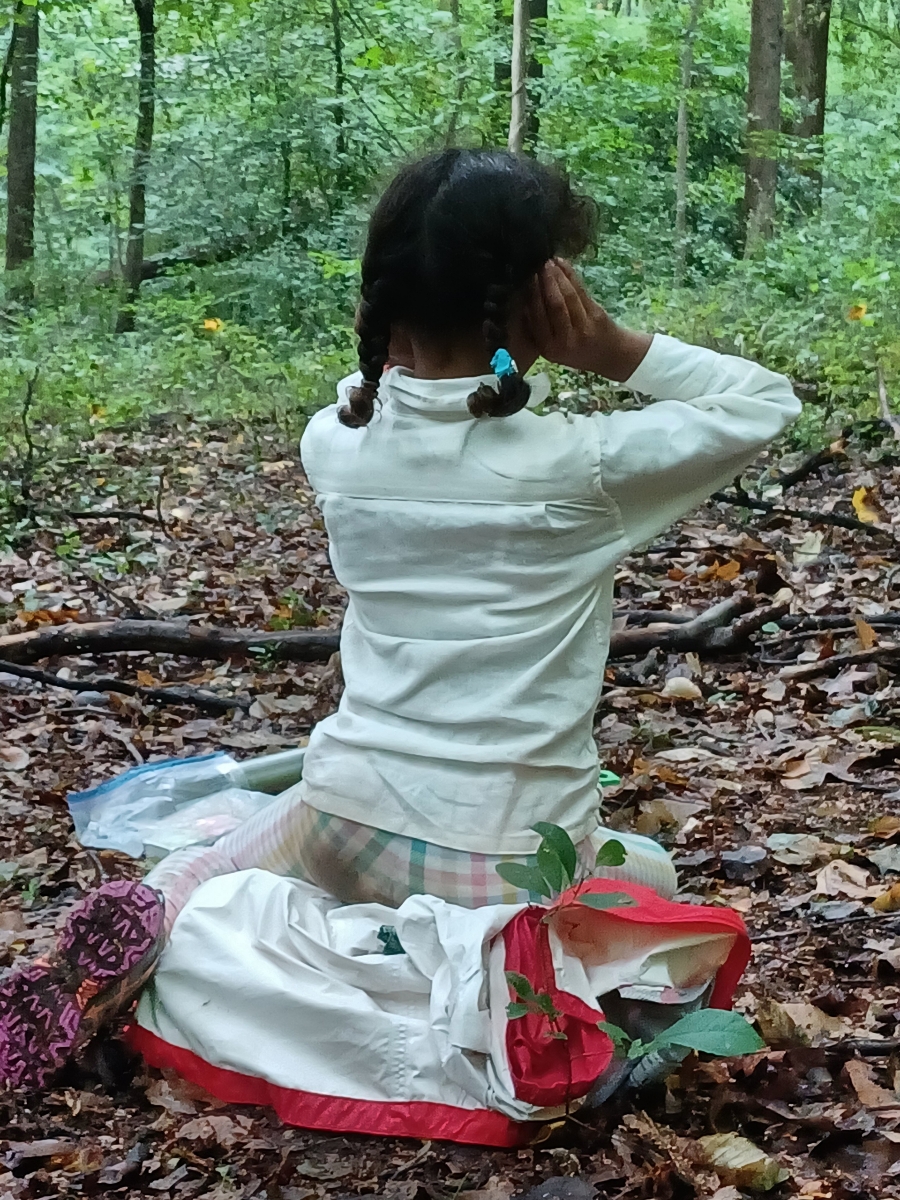
Our ear dish is rather small, compared to a deer or a dog. You’ve probably seen these animals swivel their ears in order to pinpoint a sound. We can mimic this larger, more effective ear dish, with our hands. We can also create a more pinpointed sound, by swiveling our cupped hands, or turning them around, to listen behind us. We can open our ears to more, creating the dish with our hands for the sound to bounce off of, angling forward and back, as the deer do.

  Think of the forest as a watery surface, each disruption you cause, through sound or movement, sends out a ripple that we call a concentric ring. This concentric ring consists of alarm calls from birds and squirrels, and warnings from fleeing creatures, warning of your presence, traveling through the area. When the ripples you cause have calmed, the forest has returned to “baseline”. These concentric rings create anywhere from a 20 minute to a 40 minute disruption in the baseline. We use Sit Spot as a tool to increase our awareness and practice this return to stillness. As we learn to walk silently, to listen and to see, we can sit in this quiet state for hours. We start to see things as they are, no longer only experiencing human disruption.

If you find the time, take a pause this week. Sit beneath a tree, open your deer ears, and let things be still.

By Eden Cornelius (Program Coordinator and Field Instructor)

Family Programs

Wolfpack- Nature Connection & Earthskills for Families

Our Wolfpack family programs have been deemed a ” favorite way to connect with nature as a family.” The time spent with family outdoors is precious, so why not make it adventurous too? Come on out and spend the day making memories that will last a lifetime as we explore and connect with nature through ancient & traditional skills as a family unit.

Continue reading “Family Programs”

Adult Workshops

Pathfinder – Nature Connection & Earthskills Workshops for Adults

Whether you are a backpacker, student, or professional participating in our Pathfinder Workshops for Adults you will learn useful earthskills that can be applied anywhere you may be and aid you in finding your path towards a deep nature connection. Please Join our newsletter to stay informed on our up and coming workshops. Continue reading “Adult Workshops”