Great Cordage Materials in the Mid-Atlantic Region

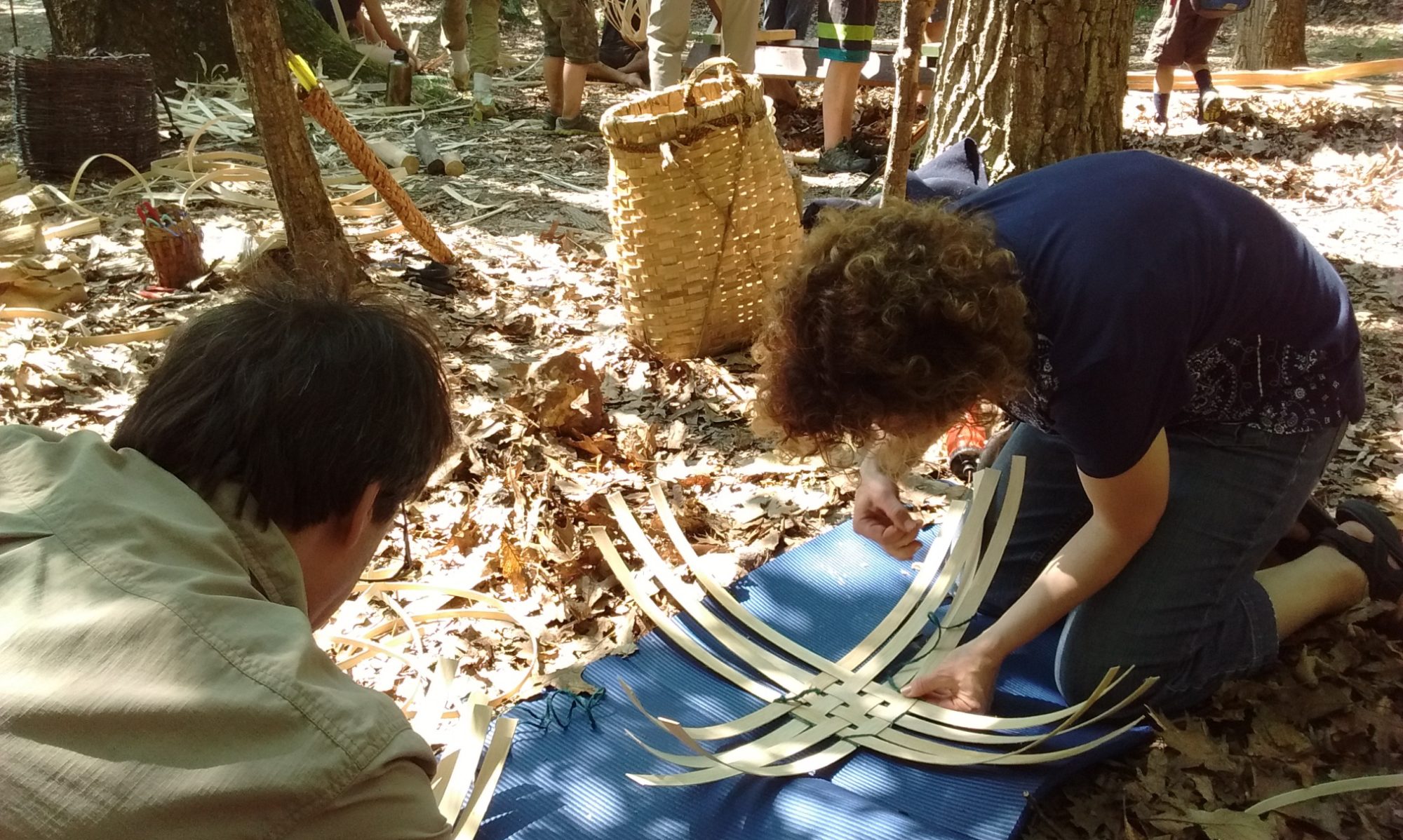
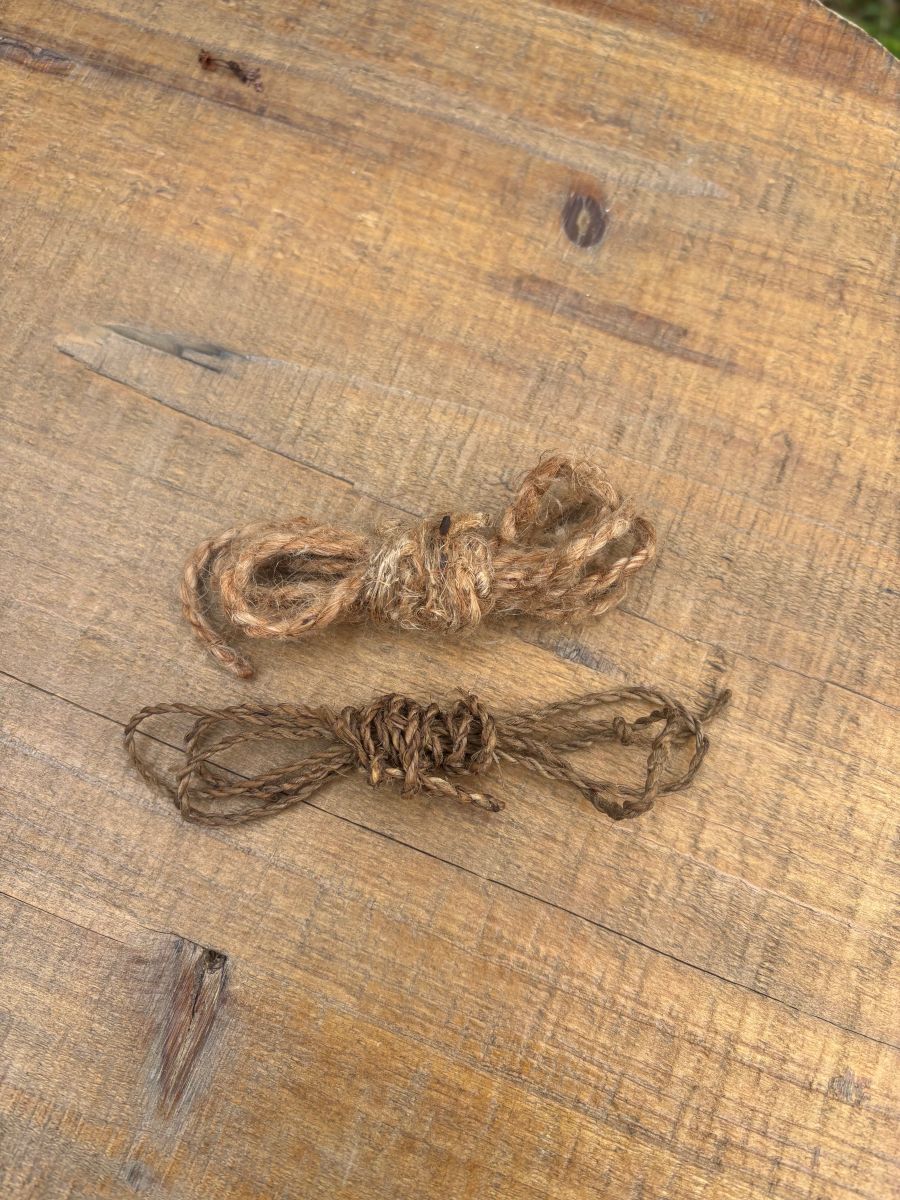
As we move into the cooler months, we’re all looking to spend more time outdoors. Increasingly, one of my favorite ways to connect with nature is by making cordage with natural materials. Cordage or rope making has been one of humanity’s fundamental skills since prehistory. Outside of survival uses like shelter building, fishing line, and bowstrings, simple rope has been instrumental in seafaring, construction, and even mathematical calculations.

I find hand twisting simple 2-ply cord to be incredibly relaxing, it clears my head and keeps my hands busy. It truly feels like what your hands are meant to do. By learning the local plants to use this skill with, I have been able to develop a tactile connection with nature that I wish to share.

Below is my guide to some of my favorite materials cordage I’ve found around the DC-Maryland area:

Wisteria:
You either know this vine for its large purple drooping flower or being one of the most destructive, tree-killing invasives on the east coast. What you might not know is that the vines hold an incredibly strong inner fiber.

Where to find it: ANYWHERE. Roadsides, forests, suburban parks, your backyard. This stuff is incredibly invasive. I find that the ground runners work best but whenever I can I try to cut wisteria off from trees.

How to process it: After cutting down the vine,I find that the easiest and fastest way to process the fibers is by making two shallow cuts at the cut end with a pair of clippers in an X pattern. This allows you to get your fingernail under the bark and start peeling. Once you’ve finished peeling, you can scrape away the outer bark with a knife and then separate the fibers lengthwise.

Dogbane:
If you were a Native American living here 1000 years ago, this would be your fiber of choice. Dogbane( also called Indian hemp due to its use in ropemaking) is an incredibly widespread perennial plant native to North America. Due to this and the high tensile of its fiber, dogbane was used for everything from bowstrings to nets to bags on this continent. All parts of the plant are highly toxic when ingested to most animals including humans by way of the cardiac glycoside, apocynamarine, which can cause cardiac arrest. But unless you plan on eating your rope, this is not a concern.

Where to find it: Dogbane likes wet soil and direct sunlight. Look in open fields, hillsides, and weedy roadsides. Dogbane is best harvested dead in the fall. I like to clip off any branches off the stem for easier transport, I always leave the seed pods in tree branches to help the seed better disperse.

How to process it: Take the woody stem and crush it flat using either your hands or a hard surface/rock depending on the strength of the stem. Afterwards, split the stem down the middle, you will now have four segments. You then break the woody stem away from the fibers in one direction and peel away in the opposite direction. For a finer cordage you can remove the outer red bark from the inner fibers, the easier way to do this is just by rubbing the fiber in your hands.

Pawpaw:
The pawpaw may be the ultimate survival tree. This small understory tree is native to most of the southeast and has become increasingly popular with foragers and gardeners The pawpaw fruit is high calorie and packed with nutrients, the wood makes for an amazing friction kit, and the inner bark makes for an incredible cord.

Where to find it:
Pawpaws grow in rich moist soil, I commonly find them on the slopes of floodplains, creeks, and marshlands. Something to note is that pawpaws grow in a type of grove called a clonal colony; meaning you can usually find dead standing trees among the living ones.

How to process it:
I look for dry standing dead pawpaw trees, ideally the bark should peel right off the wood. You can then simply peel the inner fiber away from the bark. Another possibility is collecting the bark green and retting it in water. Retting is the process of separating fibers by way of a controlled rot. This should be done for at least a day but your results may vary.

Now those were just a few plants I have experience with in the area but there are dozens more! Some that I would also look out for include: Evening Primrose, Stinging nettle, marsh mallow, and Milkweed. So get out, explore, learn a new plant and twist some cord!

BLOG Post was submitted by our field instructor Ben Kamm
Tracking: A Story Waiting to be Read

“Tracks occur where the sky touches the earth” The Tracker – Tom Brown Jr

I have this vivid memory of taking a cardboard box, some string and a carrot into the woods across the street from my house.  As seen in the cartoons, I found a stick, tied the string to it and propped up the box with the stick and put the carrot underneath.  With the opposite end of the string in my hand, I laid in the brush several feet, watching, waiting.  I don’t remember how long I laid there, but I had nothing better to do, so it was quite a while. I was feeling good about this attempt as cartoons made it very clear that carrots were a rabbits preferred food, not to mention I would always see rabbits along the edge of the woods. I was hoping one would come along and go for the carrot at which point I would pull the string and trap it under the box.  To my surprise, and disappointment, nothing came and I didn’t understand why.

If only my grandfather, or even my “great” “great” grandfather had been taught the old ways of their “great” “great” grandfathers, so that my father could pass them onto me.  But unfortunately, that is not my history.  However I had this deep passion to learn the old ways at a very young age. 

Life went on, time passed, and thanks to the skills my father possessed and could pass on, I learned the ways of being a successful “modern” man, modern awareness and how spot the predators of the city and suburbs.  Then one day, thirty years ago, I read a book changed my life.

I was given a copy of The Tracker written by Tom Brown Jr. I couldn’t put the book down. Next thing I knew read his next 5 books and had a more questions about who I was and what is our purpose as humans on this earth.  At the end of each book there was a note in the back saying something along the lines of “if you’re interested in learning more about these skills, contact the Tracker School…”

Without telling the long version of the story, I ended attending the Standard class (a level 1 class) at the tracker school.  There I learned, with 125 others, the sacred order of survival and our basic needs to live; shelter, water, fire, and food.

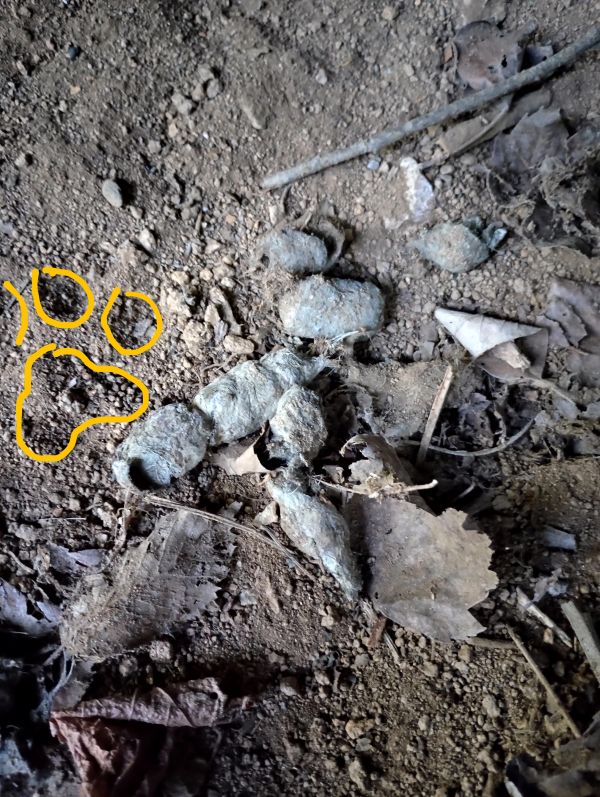
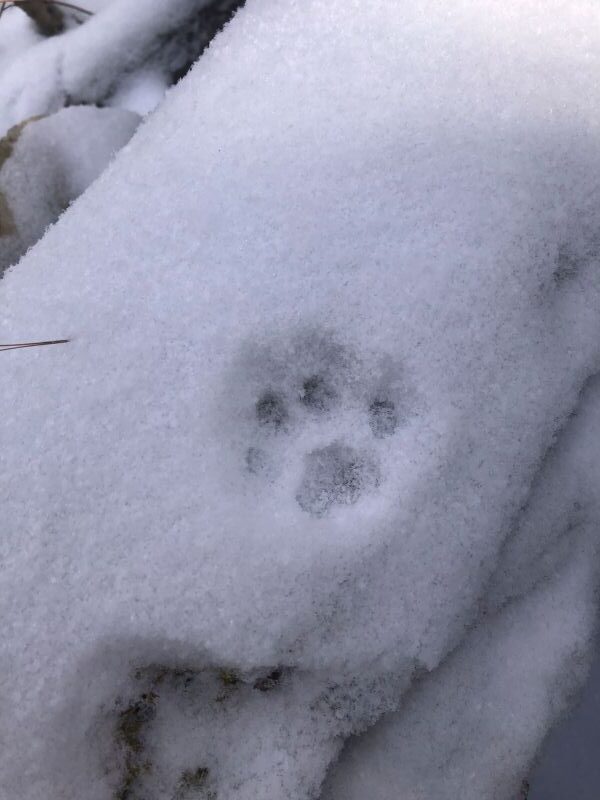
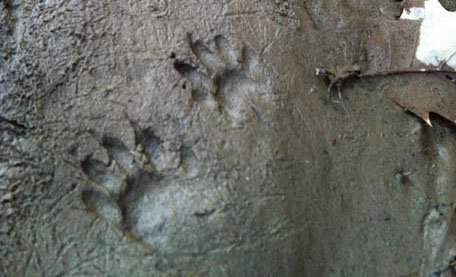
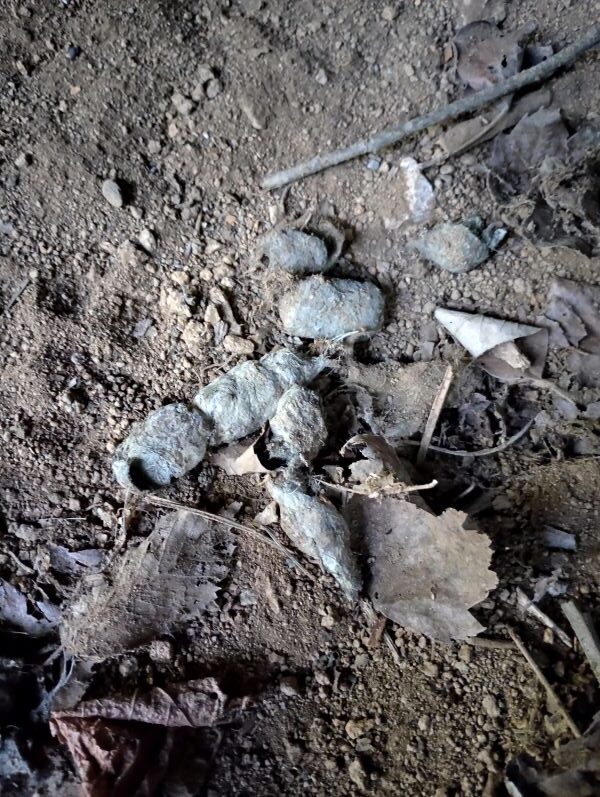
During the standard Tom taught hours and hours of animal tracking, down loading enough information to fill a college credit course.  I couldn’t believe how much information was stored in a single track on the ground. Throughout the week It became very clear Toms passion was tracking and he was a tracker.

Reading that book, finding the Tracker School, and attending that class filled a void within my being that I had no idea existed.  Everything about my childhood started to make sense.  My passions, how I learned, the things that made me feel alive all came together within my being and I began to feel complete, with a drive to learn more about who I am and what my purpose was through learning the “old ways”. 

Tom said, “tracking is like reading a book, there is a story that is being told with each track being a word, The trail a paragraph, and the story ends when you find the final track.” He also said “when you’re tracking an animal, you become the animal and begin to “see through their eyes,” living their story.”

With each track you can learn so much. How fast they were moving, which way were they looking, if they were comfortable or on alert, hungry or satiated and so much more. The more you more you track, the more questions you ask, the more you ask more becomes apparent, sentences, and paragraphs of the story would become clearer. If only I was taught how to read tracks at the same time, I was introduced to the written word… if only.

Bill Kaczor – Director/Co-founder

Travel Without Time or Destination!

So many people talk about wanting to connect with nature, achieving oneness, or grounding themselves. There are so many programs and organizations advertising nature connection (we sure have them). I don’t want to be the bearer of bad news, but in my opinion no program or workshop can make that happen, it’s too personal of a journey.  However, I do believe that workshops and programs can lead you to the trail head, point you in a direction, or give you the vehicle to get you there, but there is a catch!  It definitely isn’t as easy as a click of a mouse and it won’t happen overnight!  I can say, learning wilderness skills and increasing my awareness have been part of the best years of my life! When I experienced the feeling of oneness and connection for the first time it was only for a moment!  And it wasn’t in a program or class, it was with a group of friends practicing what we learned from a program we all had attended.  Once you experience it, what then?  You want more, you need more, you want it to last longer, but how?  In my experience I have found that I feel one with the earth, myself, and connected to those around me when I am regularly working on skills and projects from the days of our ancestors. Whether it’s bow making, animal tracking, or studying wild plants, these skills form a direct connection to the earth, our ancestors, and our deeper selves. Another way to achieve this is by venturing out without time or a destination.These traditions are some of the keys that open the doorways to the past, present, future & inner peace! Take the journey, leave the watch and phone behind. Learn to travel without time or destination and most importantly enjoy yourself!

At Ancestral Knowledge we are dedicated to helping people find their passions!  If you would like to get started on the personal journey of a lifetime let me know how we can help you get started. 
Thanks for reading!
Bill
PS-  Check out one of our programs below! They are perfect for all skill levels from beginner to advanced.  They will surely add some fun and adventure to your life!