There is one thing I love, REAL Maple Syrup… I can drink it right from the bottle, eat it by the spoon full, or put a little in my coffee. I use it when I do a cleanse and love it on pancakes and crepes. I love it as a candy and as granulated sugar substitute.
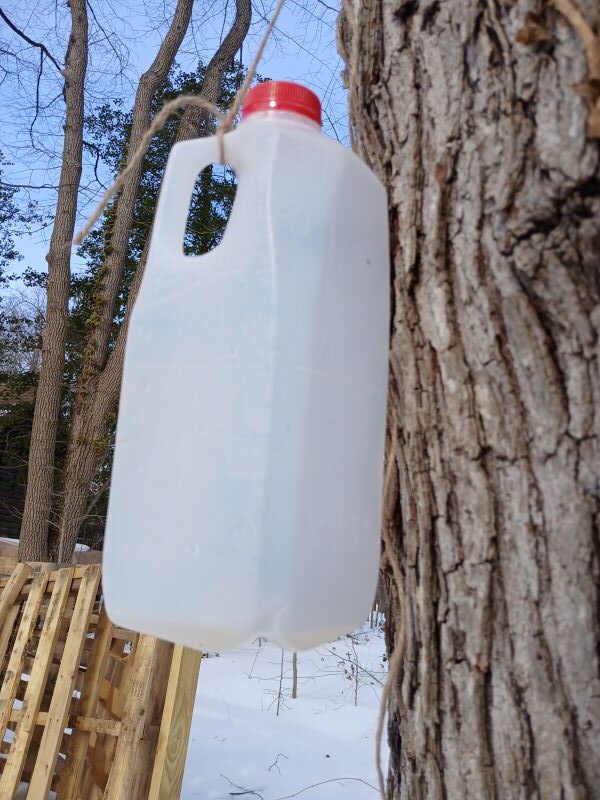
My first experience with tapping trees for sap was when I visited Alex Kilgore outside of Boone North Carolina. We were walking his property talking about hunting and sharing stories when I saw his buckets hanging from the sugar maples on his property. He told me about the process and went and got two glasses with ice and poured some of the fresh sap out of the bucket over the ice and handed it to me. OH MY GOD! it was the most wonderful beverage to enjoy with a friend.
Since then I have learned a little bit about it and that there are several trees you can collect sap from and process it into syrup. Several different types of Maples, each differing in degree of sweetness, as well, many different ways of tapping them, naturally compared to conventional methods.
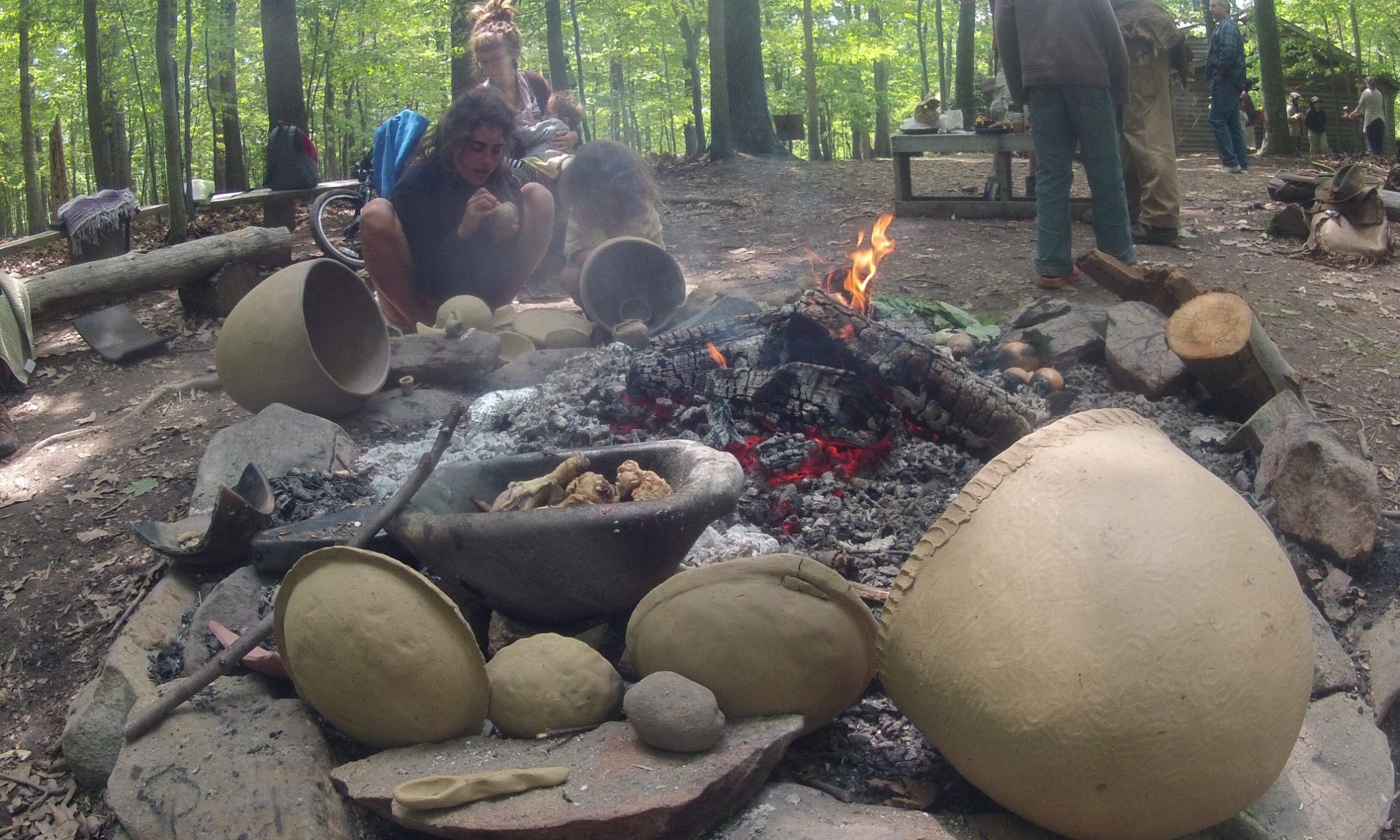
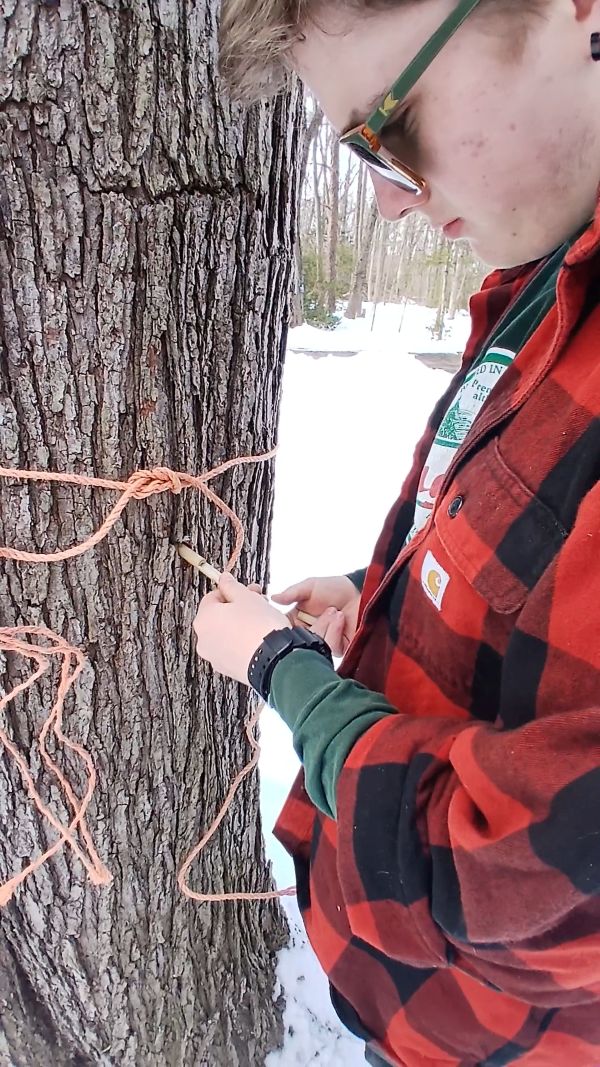
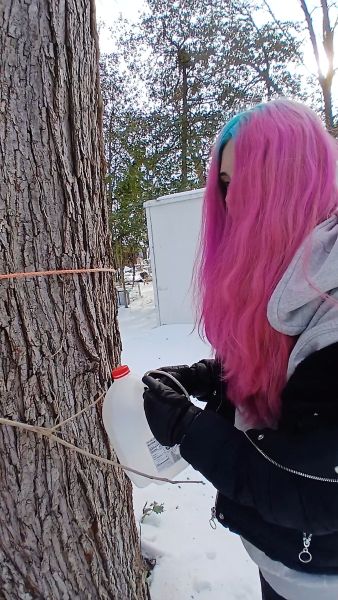
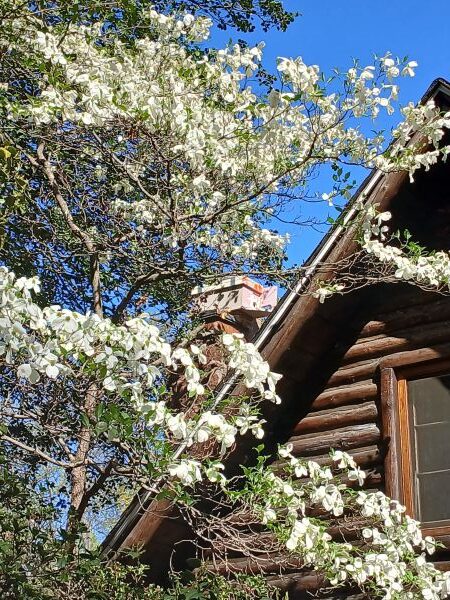
Now that our office resides in this sweet little cabin tucked away into the woods surrounded by maple trees, and we have a few groups of eager to learn teenagers, we have decided to venture down the road of collecting an processing sap for syrup making. In the fall we collected acorns, processed, leached, ground and cooked with them and now in the early spring we will do the same with maple sap.
The best thing about this line of work is that I get to work with and teach people who have varying levels of skills, experience, and expertise. The benefit of being surrounded by these people is that we are each always learning and growing, becoming more and more knowledgeable. One of my favorite things about teaching is learning along side our students. It helps role model a level of humility and reinforces that we are all equals. As my mentor, Tom Brown Jr, once said during his Expert Tracking class, “the best thing about teaching tracking is that you have 50 different points of view, and every class i learn something new from my students and they way they see things.” That statement has stuck with me as one of the most powerful lessons I learned from him.
Submitted by Bill Kaczor – co-founder and ED of Ancestral Knowledge
For the next few months, Jupiter will be shining bright in the eastern night sky in the constellation Gemini as it makes its nearest pass to the planet Earth. On January 10th, Jupiter will be opposite the sun and then will go retrograde. Jupiter will appear to move slowly across Gemini, night after night, until returning back to prograde motion in mid April.
Retrograde motion is caused when the Earth passes another planet, making it appear to be moving backwards. Imagine if you will, two well lit cars driving on a 2 lane oval racetrack on a pitch black night. Both cars are traveling in the same direction as do all the planets. As car 1 passes car 2, car 2 appears to move backwards relative to the view out of the side window of car 1. All of the planets appear to go through retrograde motion. Each planets cycle varies depending on how long the planet takes to go around the sun. Jupiter goes retrograde about every 9 months and lasts for 4 months.
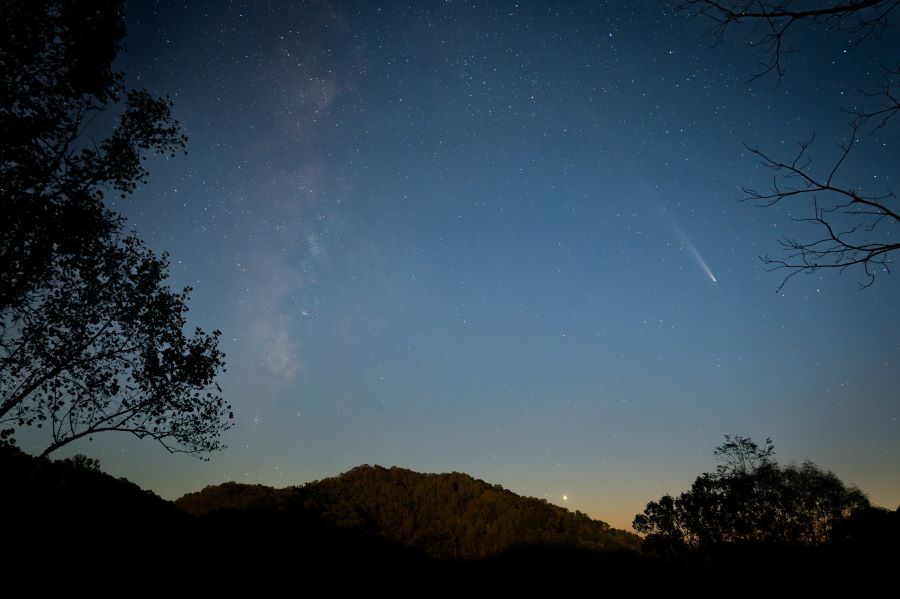
Comet A3 with the Milky Way and Venus rising. The full moon rising is casting a shadow of a the mountain top onto another mountain in the foregroung. Photo by JP FURNAS
A fun fact about Jupiter is that there are 4 moons that are easily seen with minimal magnification. These 4 moons are known as the Galileon moons. This observation by Galileo was quite contentious in 1610 because God made the Earth at the center of the world. Copernicus, 60 years prior before passing away, published his heliocentric observations in De revolutionibus orbium. Ironically, this hardly caused a stir in the Catholic church. Not till Galileo made the scene. With the first telescope made in 1608 by a Dutch spectacle maker, Galileo was able to improve the design and make significant observations of Jupiter’s biggest moons. With a simple pair of binoculars, kids telescopes, or a good camera, you can witness for yourself 4 celestial objects that are clearly not geocentric. Go out and make observations every 30 to 60 minutes and notice how fast Io, Europa, Ganymede, and Callisto move around Jupiter. Have fun!
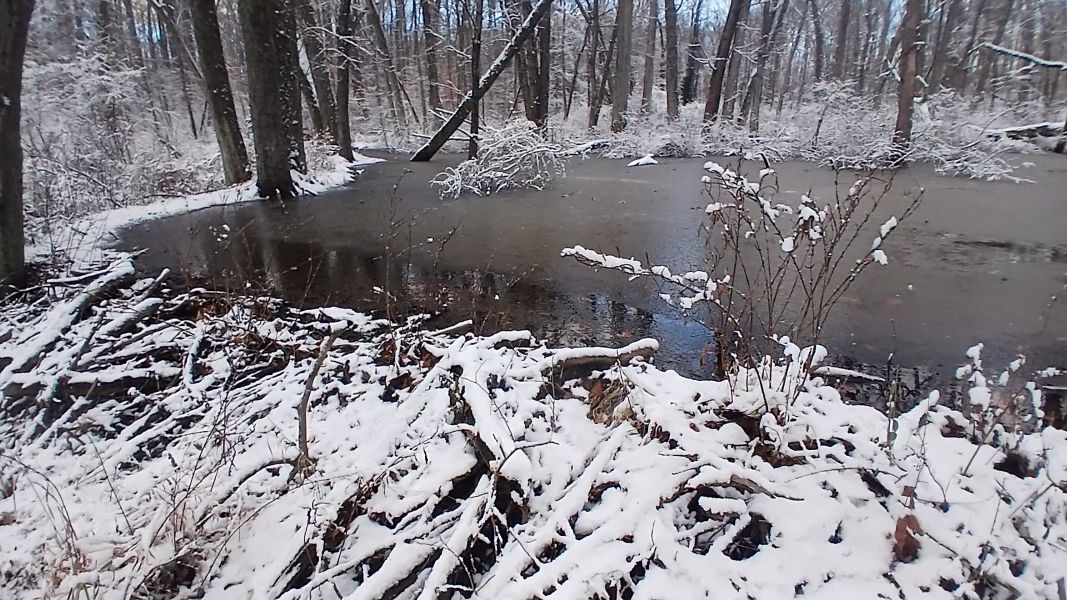
As I stepped outside the morning after the first snowfall here in Maryland, a comforting silence hung in the air. It immediately felt like peace, like all of the muffled noise had vanished and I was being embraced by a blanket of calm. I suddenly felt like everything in front of me became acutely clear; like all the inner chatter came to an abrupt halt. I could hear the birds conversing loudly, I could hear my footsteps crinkle the snow underneath my feet. I could hear the squirrel gathering its nuts across the street. Those were the only sounds I heard and it all seemed so peaceful and perfect. The snow has a way of ushering in an inviting silence – a gift maybe you might not know you wanted or were even looking for. I had been feeling this longing for a few weeks now and was so excited to wake up to the snow covered landscape, as I knew what I would feel once I stepped outside.
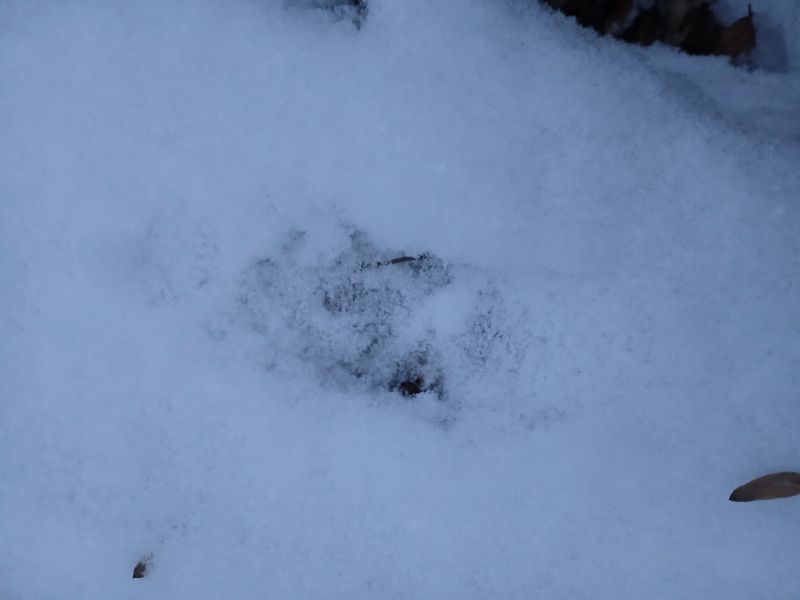
Nature has a way of offering us this gift of presence, if we can only take the first steps. As I continued to walk I kept looking down at the fresh animal tracks next to me. The perfect reminder of the wildlife that walks side by side with us on this Earth. I saw many fresh squirrel and bird prints on my walk and I couldn’t help but smile thinking of these animals scurrying along, perhaps just as excited at the first snowfall as I was. It’s these moments outside where I feel so connected to all of Nature it makes me feel so grateful, full, and happy. These moments outside, to pause from the hustle and bustle of this season, and be present with what is right in front of me feels like the best present of all.
One of the many gifts passed down to the students of our programs is the practice of “Sit Spot”. This is the practice of observing using all of your senses, of melting into the landscape so the wildlife goes about their business without any disturbance and you get to experience the forest in its most natural state. It is about being truly present to the moment – an opportunity to release the mind chatter and see again what is in front of you. One time, a few years back, I was hiking up Mt. Shasta in northern California. It was just me and between the many pine trees and clear blue sky I decided to stop and lay down to rest. I took out a thin cotton blanket and laid down on top closing my eyes. After some time here a squirrel walked right over me! I couldn’t believe it! At the time I was incredibly surprised and a bit scared truthfully. Looking back I recall it as a huge gift to have a wild animal that close to me – I was just a part of the forest floor to the squirrel while he meandered right over my body. I had completely and a bit unintentionally melded into the landscape. 🙂
The ongoing consistent practice of Sit Spot is an invitation to be one with the wild around you; to see things from the perspective of the forest floor, or a strand of tall grass, or a snail; to observe and learn about and from the subtle life all around us. I personally believe if we accepted this invitation consistently, of going outside to sit – to observe- to step outside of ourselves- to become immersed completely in nature – the peace and understanding we would find would blow us away and the trajectory of our collective future would most likely experience an enormous shift.
I feel like the snow is Natures subtle invitation to us to feel the peace it creates merely with its presence. I hope this holiday season you get the opportunity to step outside into the snow, outside of the hustle and bustle, and connect to Winters subtle invitation of peace too.
When I was in school, like many kids I loved a snow day. I rarely got sick, but it wasn’t time off from reading and learning that I looked forward to. No, after I shoveled the driveway, I would scamper off to the woods. I was fortunate that my parent’s property backed up to Patapsco State Park. There the web of life was constantly writing for those willing to read from the pages of the Earth. While an animal will leave tracks behind regardless of if there is snow or not, a fresh layer of fluffy white snow made it easy for even a lightly trained eye to easily go out and pick up on the story.
Red foxes were one of my favorite animals to follow. Unlike deer who wandered in herds along the same trails, flowing like so many suburban commuters on their way home from the office, a fox usually was travelling solo and cut a clear trail that I could easily follow through the woods. Along this trail you could see what he had been doing fairly easily. In your mind’s eye you could play a little movie of the fox’s morning. You could see when the tracks were in a nice evenly spaced line like stitches in a piece of cloth and know the fox was flowing smoothly across the landscape, its copper colored coat puffed out against the cold keeping him warm. If it came to a stop you would see the even stitches stop and the two front paws standing side by side. You could look around and try and imagine why the fox stopped. What did it hear? What did it see. Sometimes the reason was fairly obvious, you could read from the prints that the fox had spotted prey and there would be signs of it pouncing on its meal. Sometimes you could see it had been successful and there would be a little blood stain on the snow. Sometimes there would be clues as to what the fox had caught, some feathers from a songbird, a bit of fur or the foot of a vole or a mouse.
As I followed the trails, the snow muffled my footsteps across the normally noisy fallen leaves of the forest. If I kept my eyes peeled and didn’t just fall into tunnel vision staring at the tracks, more than once I would catch up to the fox, curled up in a ball, like a last live ember in the white ashes of a campfire. The fox glowed against the white snow and gray winter tree trunks. Here the game shifted, how close could I get before he would bust me? Writing this, and knowing what I know now, I know part of it was dumb luck on my part. The winds on the backside of a winter snow storm usually would have me down wind of the sleeping foxes. These factors, the quieting of my footsteps by the snow, and the wind in my favor muted the effectiveness of the fox’s keen hearing and sense of smell, and I more than once stalked within 20 feet of the sleeping fox. The looks on their faces when they finally noticed me always tickled me; it was a mixture of shock and surprise and I like to think a hint of embarrassment that they had let a silly human catch them unawares.
Hopefully we get a few more snow days this winter. Who knows how many more years we will have them, even from my not terribly long ago youth, they have become less frequent. If we do, I hope you get to spend a morning diving into whatever little chunk of the natural world you have in your neighborhood and read a page from the lives of the animals who live there.
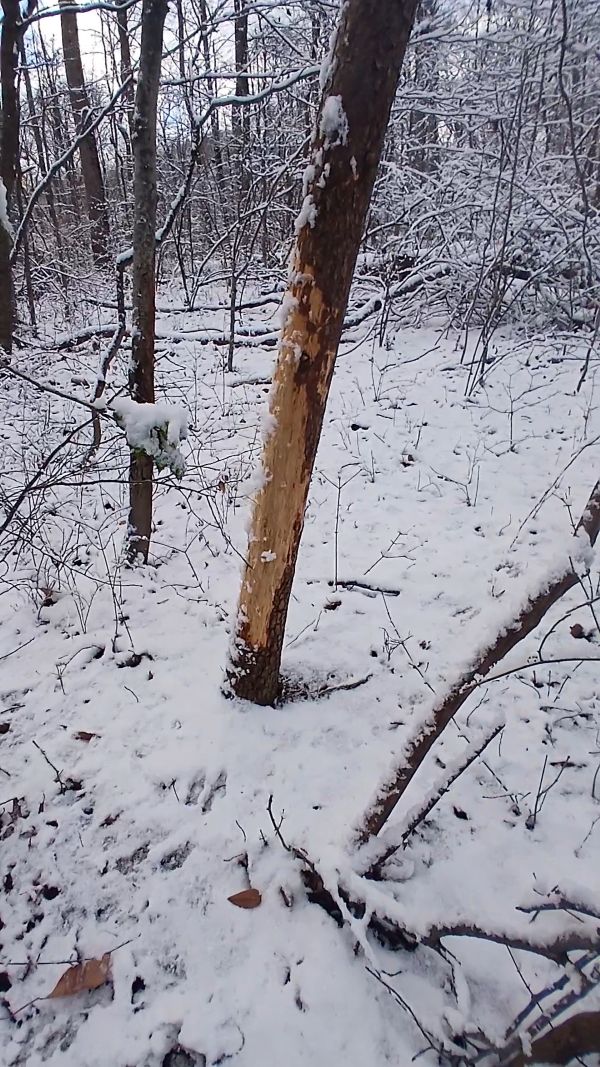
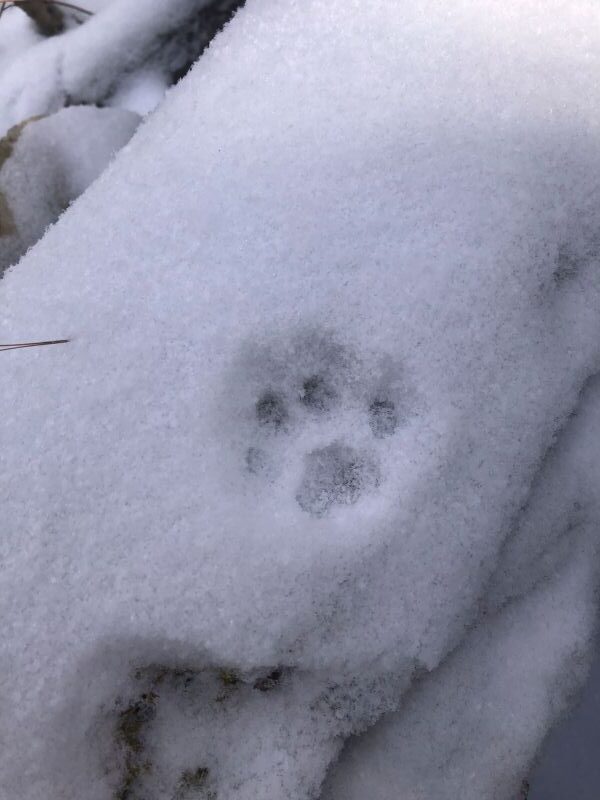
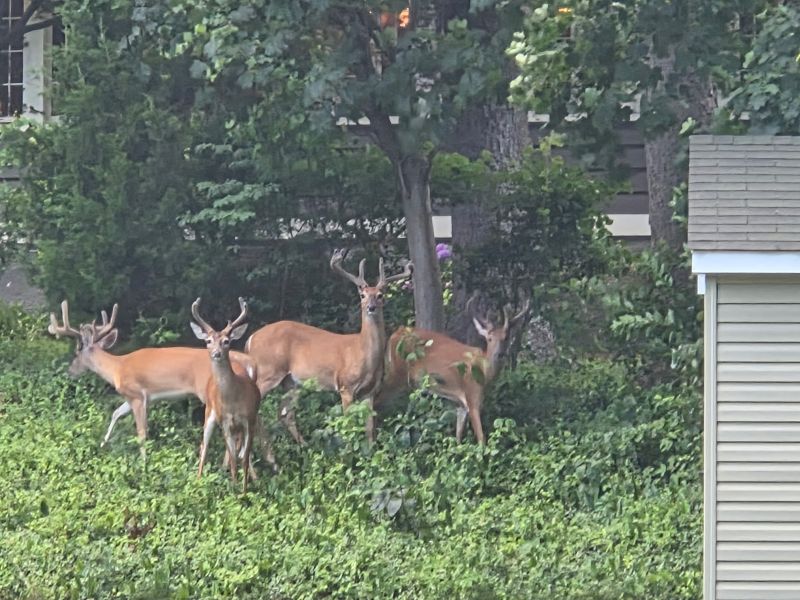
As fall arrived I made sure my bow and arrows were in order. The DMV is filled with suburban deer who face minimal hunting and predator pressure. This imbalance creates space for invasives and hampers natural forest succession. Look at many of our parks in the winter, if they are not running a program to manage the deer, any plants growing below shoulder height are most likely heavily browsed or invasives. Part of the philosophy AK follows is that humans are not apart from nature but are a part of it. While humans have caused this situation and it would be ideal to have the whitetail’s natural predators, wolves and mountain lions come in to fulfill their ecological role, most of the public does not want top predators in their backyards. As a result it is on use to harvest the deer.
Part of respecting the deer is utilizing as much of it as possible. We save our hides for teaching students as well as for our own personal projects. We harvest the sinews for building arrows and atlatl darts, making bow strings and more. We demonstrate using the bones for tool making. And the meat gets eaten. Many people only take a few choice cuts off the deer, the backstrap is the most popular, and some cuts out of the rump. The rest if they keep it gets ground up and turned into burger.
Whitetail meat is extremely healthy. In my view it is extremely ethical to consume as the deer have not been subjected to confinement and filthy conditions in the industrial agricultural system and we are . Venison has a reputation. Some say it is “gamey”. Part of that is expecting it to taste like beef or other commercially raised animals. Some of that is poor processing (if you want to learn how to cleanly and safely process a deer sign up for our Way of the Hunter course). Some people complain venison is tough. Part of that is deer are wild animals who haven’t had soft cushy lives they have more connective tissue per pound of meat than a cow. If you approach the meat in the appropriate manner for how to cook it, it is excellent.
Last week we had a guest at the cabin. They had come from out of town to teach a class for us and were going to stay in the spare bedroom. I had received a front shoulder off a deer and made it for dinner for the two of us. The front shoulder off a deer isn’t the prize cut, but cooking it slow and low, braising it for a few hours turns it into a wonderful meal. The recipe which follows is for lemon and wine braise venison shoulder. I accompanied it with lemon and herb pan roasted potatoes, but turmeric and lemon roasted carrots would also be an excellent veg to go with it. While I prepared it for two people, there was plenty left over. This shoulder off a medium sized buck would have easily fed a family of 4. A small doe would probably feed 4 and a large buck would serve 8. If people want more recipes for other under appreciated cuts, next month I will tackle the shanks.
I deboned the shoulder. You can view this video of deboning a lamb shoulder, the process is the same. If you take your deer to a butcher, you can ask they do this for you.
Salt and roll the shoulder and tie it up with butchers twine.
Preheat your oven to 325.
Sear the shoulder in a hot cast iron pan with olive oil, alternatively you could do this on a grill.
After you have seared it off transfer it to a covered roasting pan with one onion sliced. Deglaze the pan with the veggie stock and pour the used stock into the pan. Juice a lemon into the pan and put the squeezed-out lemon in there, add a few sprigs of thyme, 1.5 cups white wine, two cloves garlic and black pepper. This moderate heat and the liquid let the tough connective tissues break down and become nice and tender.
Cover it and place it in your oven at 300 for 3.5 hours. If you are busy, you could also place it in a slow cooker and let it run all day.
Once done, pull from the oven and allow it to cool for 30 minutes. Slice and serve with your choice of sides.
I would strongly recommend reserving the braising liquid once the meat has rested, straining it and returning it to a sauce pan. Bring it to a simmer and add a slurry of 1Tbs cornstarch and 1Tbs COLD water per cup of liquid. Whisk it together and as soon as the starch flavor has cooked off remove it from the heat. Serve this sauce over the venison.
We had our first real cold front of the fall a couple weeks ago. Temperature wise it went from feeling like summer to feeling like fall over night. If you had been in the forest, you would have been noticing the change for a while. Mid-August is when I started to notice the changes the changes starting to take place. The green briar that the kids loved snacking on all summer stopped putting out new growth. The black gum trees and tulip poplar had started to shed some of their leaves. Many of the flowering plants are now done for the year, I’ve mostly just been seeing the goldenrod and asters. At the start of September, I saw a buck with his first set of antlers as his velvet began cracking. By now, unless something is very wrong, all the bucks have shed their velvet and are getting ready for the rut. The blue jays are louder and squawking. We’ve seen songbirds pass through our region on their way to warmer climes. Yet despite all these signs of Fall the DC mosquitos have still been going strong.
Here at Ancestral Knowledge we are like those mosquitoes, still going. We are still working to connect people to their environment but the shift in seasons has shifted our programing. Summer camps are over; we are working with our homeschool groups and custom programing for local private schools as well as weekend workshops. We are still outside almost every day. Unlike the mosquitos we will stay busy all winter. I am busy right now building out and putting some of our upcoming courses up on the website. We have a hunting apprenticeship coming up. I just wrapped up a planning meeting for our annual Wild Foods Weekend just after Thanksgiving. We will start hosting bi-weekly teen campfire nights and biweekly primitive skills nights for adults. We hope to see you come out and work on skills, catch up with old friends and maybe make some new ones.
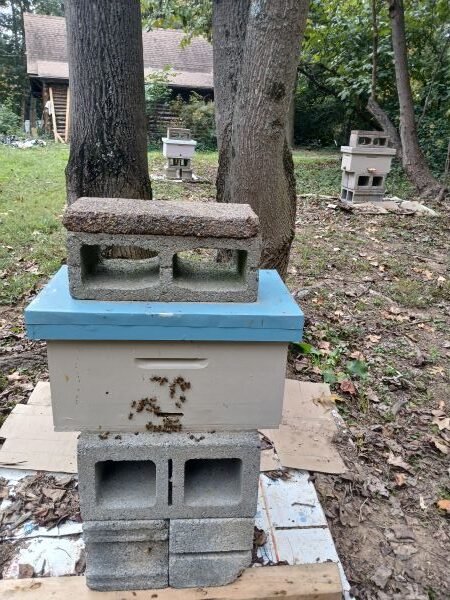
I have always been amazed by pollinators and now that we have a great place to house some bees, I put the call out to my friend who has been sharing his honey and wax with me for years. This Spring my buddy Stefano, from Azure Bee Apiaries, helped me catch my first swarm of honey bees.
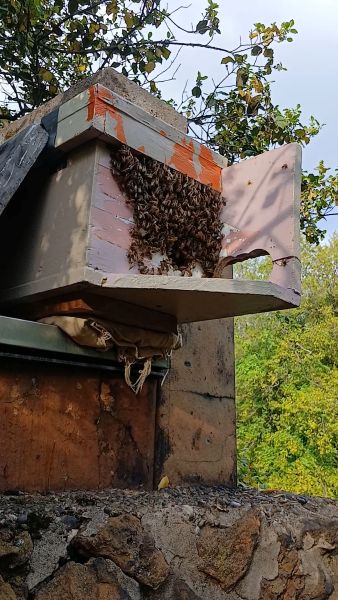
First thing we did was set a bait hive up on the chimney of the new Ancestral Knowledge Museum and Primitive Skills Research Center. The bait hive we used was a box with 6 frames with a few with old natural comb from some other hives. He also put some queen bee pheromones on a Q-tip that he place in the box. the box was strapped up to the chimney so it couldn’t fall. Stefano was downloading all sorts of information through the whole process, I wish i had a note pad.
The day after we set up the bait hive I had to go to the Mid Atlantic Primitive Skills Gathering site to start setting up. When I came back to the cabin, to my delight, i noticed the box was covered in bees!!! We attracted a swarm!
Now that we have a swarm of bees, we needed to move them from the chimney to the ground. The bees have been in their new home for over a week so this was a very slow process. We had to move it off the chimney to the roof first, allowing the bees to find its new position, then to the edge of the roof, then to the ground, then across the yard. After about 6 weeks and 6 moves, it was finally in its final resting place.
Meanwhile I visited my other buddy Tony at Red Sun Tea company in Asheville NC. He has an amazing apiary that pollinates his tea plants. I went there to tell him about my exciting new hobby, and absorb any tidbits of knowledge he wanted to drop for my. While I was there, one of his colonies split and swarmed, so I was able to help catch a swarm and put it into a new hive. What a crazy experience, to be completely engulfed in bees flying all around us, landing on our faces and bodies, and not stinging us.
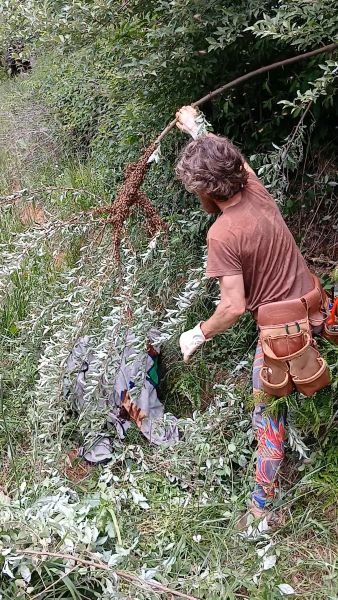
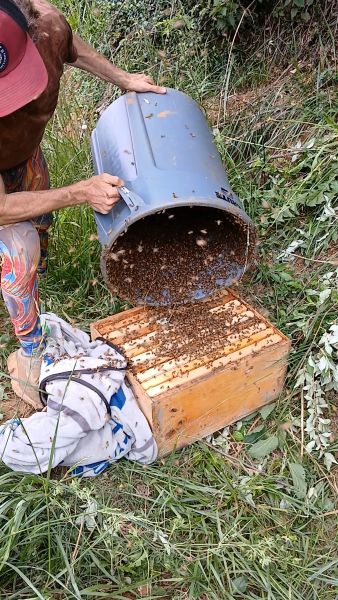
The bees swarmed and gathered on a branch about 12 feet off the ground in a small tree that we could bend down over a large trash can. With one big, jolting shake the swarm fell in a big clump into the large trash can below it. One of the neatest things about this, besides standing in the midst of 1000’s of bees going absolutely crazy, was the transfer from the can to the hive box. As Tony lifted the trash can and slowly dumped it over the hive box, the bees poured out of the trash can like a liquid, flowing in waves as they rolled out of the can into the hive box. It was mesmerizing. I was so excited to go home to visit with my new bee friends.
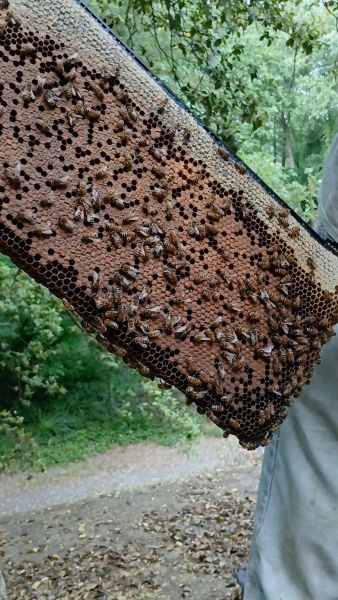
I came back to my new swarm, fired up to become their buddy. Every couple days I would go out and open the hive, let the bees land on me, letting them get a feel for who I am and that I was not a threat. Over the next couple of months I would randomly go out and watch their vigorous activity, leaving and returning with pollen packed legs, observing their different dances they did and trying to learn from their behaviors. One of my favorite things to do was put my face near the entrance and just breath in the sweet earthy smell that emanated from the hive. One day, my son and I opened the hive and pulled out the individual frames to see if we could find the queen. Early on Stefano and I couldn’t locate here, so I had yet to meet her. As we pulled frames and carefully observed, Nick spotted her. I couldn’t have been any happier about this journey that I had set out on.
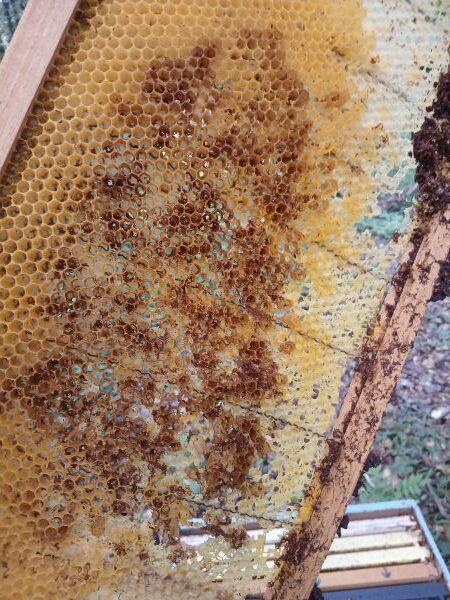
After a while Stefano told me that I should start feeding the bees to help prepare them for the winter. He talked me through how to do that and I set up a feeding bag in the top of the hive. The bees took to it immediately. a couple weeks went by and I added more food, it was all natural honey from Stefano. I went out one day to check on its supply and I immediately noticed that there wasn’t as much activity, as I approached the hive I could smell this odd, fermentation like smell. When I opened up the hive there were no bees, no honey, just larvae and beetles. All of the honeycomb was dry and half gone.
The hive had been raided by other bees and infested with wax moths and hive beetles. I was at a complete loss of words, the feelings I was experiencing were like none I had felt before, anger and sadness jumbled together stirring in my head. I called Stefano and he said, yeah, welcome to the beekeeping journey. He shared that the way to be a successful beekeeper is to have many hives as invasions, collapse, and other things contribute to the failure of a hive and the more you have the more successful you will be.
I found something in common between Stefano and Tony, that commonality is that they both focus on capturing and raising wild bees that are untreated with strong genetics. Neither of them where the classic Bee Suits, and Stefano doesn’t use smoke to subdue them. They both stay very calm and move very slowly and deliberately. Watching them work on hives is pretty amazing to see.
Since the loss of my first swarm, Stefano has brought me 3 more hives to tend over through the fall and winter. I am looking forward to more learning experiences and adventures with the bees.
If you or a friend has been wanting to explore the world of beekeeping, Stefano is teaching a workshop in October here at the Ancestral Knowledge. You can join me and we can journey together as he shows us how he works his magic and shares what he knows about the art of beekeeping.
This post was submitted by our Executive Director, Bill Kaczor
Summer is the season for berries, but fall is the season for nuts. All summer long the nut bearing trees of our forest have been pumping energy into their next generation. In a way I relate, all summer I have been working and putting in the effort to foster the next generation who have been attending our summer camps. Like the trees, not every camper is going to be a full instructor of these skills and knowledge which Ancestral Knowledge strives to pass down, but each of them carries that seed and you never know which one or when that seed will germinate and grow to carry on its ancient line.
A young black walnut growing behind the cabin. No nuts yet, but in the future it should bear fruit.
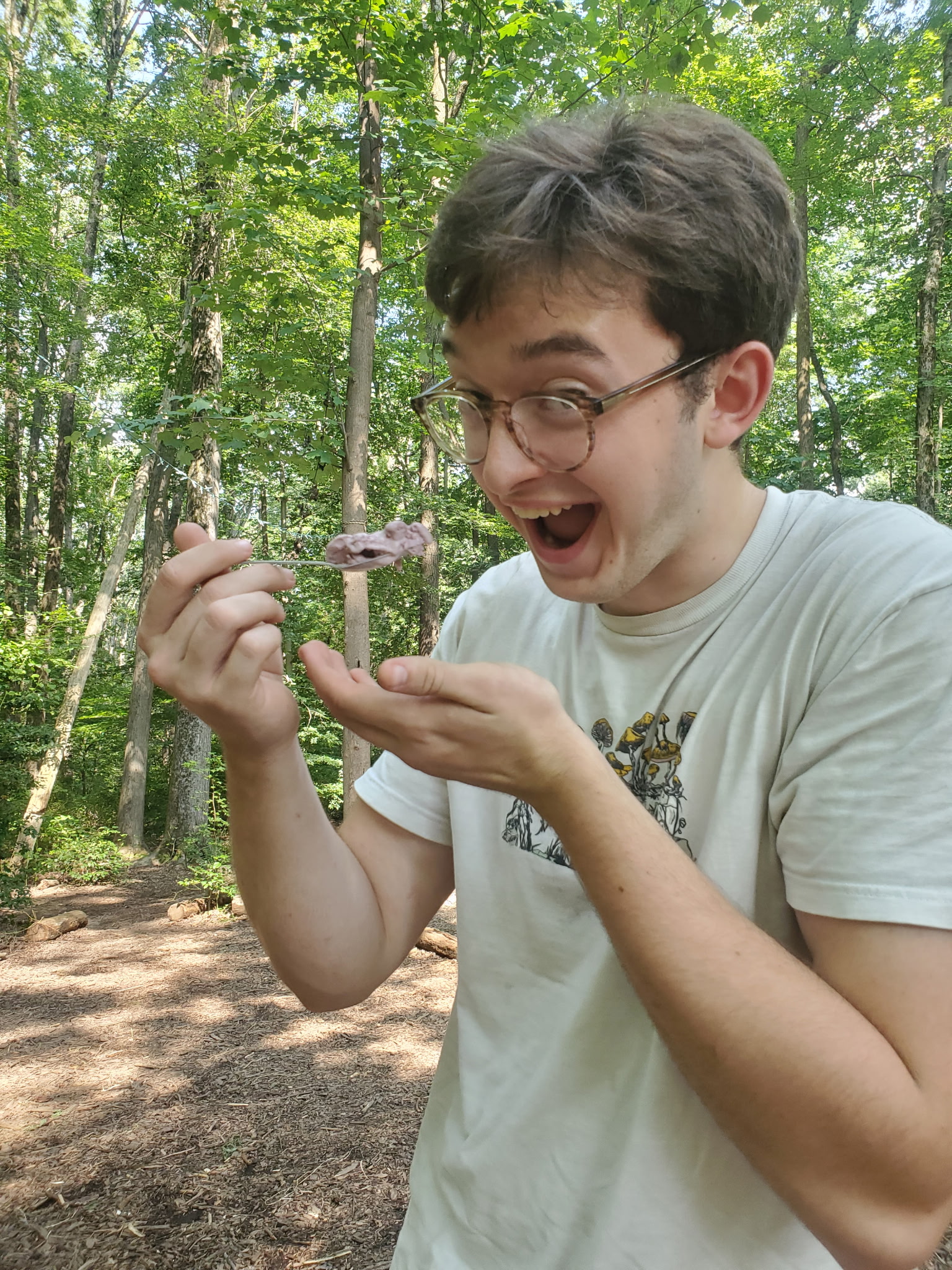
The oaks have been raining acorns here at the cabin. Just yesterday we collected 10 gallons of acorns for processing with one of our Teen Apprentice groups. There are plenty of culinary uses for acorns from flour for pancakes to a thickener for soups and stews. One of the nuts I love is the native Black Walnut. Like many trees and particularly nut trees, they give us many gifts. The wood is gorgeous, they provide great shade all summer long, the husks of the nuts give us a dye, but the actual nut is a bit overlooked. Black walnuts are a bit like Maryland’s beloved blue claw crabs in that they take a bit of work to get the meat out. They do not taste like the commercial walnuts you buy, which are english walnuts, black walnuts have a more robust taste and in my opinion a bit of a fruity quality to them. I love to work them into my seasonal ice cream rotation and make a maple and black walnut ice cream. Below is my recipe, if you don’t have an ice cream maker, no problem, there are plenty of videos on YouTube or you can google “ziplock bag ice cream”. It is a great way to teach kids about chemistry if you are so inclined.
For a quart of ice you will need:
1 1/4 cups heavy cream
1 3/4 cups whole milk
The nut meat out of a dozen black walnuts this should be about a ¼ cup.
½ cup maple sugar (maple syrup is easier to find, if using add an extra teaspoon and reduce the milk by ¼ cup. Alternatively if you don’t have ready access to maple sugars or don’t like that flavor you can use table sugar)
3 egg yolks
¼ tsp guar gum (optional, but it helps with the texture)
Pinch salt
Collect your walnuts using gloves to dehull them. I like to let them dry before processing them further. Beware the squirrels may try and snag some.
Crack them open. If you don’t have a nut cracker that can handle it, channel lock or big vice grip pliers can be used as well as carefully using a rock or hammer on a concrete sidewalk or slab. A pointy tool can be helpful for getting the meat out of the hull. If the nut inside is black, gray, bright yellow or moldy don’t use them.
A bad nut, don’t try and scavenge from this one.
For the ice cream base, add the cream and milk and walnut bits to a pan and heat up to 140°f.
Whisk the maple sugar and the guar gum before adding them to the yolks. If using maple syrup you may choose to omit the guar gum as it will just get clumpy when it hits the liquid or you can mix it with the salt and a teaspoon of table sugar to prevent it from clumping up.)
Add ¼ of the hot cream mixture to the egg yolks and sugar mixture and whisk. This will temper the egg yolks making it safe to eat. Add the remaining cream mix and finish whisking.
Pop this in the fridge overnight.
If you have an ice cream machine, follow the freezer instructions. If you do not you can google instructions for “ziplock bag ice cream” or get a quick overview here: https://www.youtube.com/shorts/oIWAtN4x92Y
You can eat it straight out of the churn as soft serve or you can pop it in the freezer for a few hours to let it set up.
Bon Appétite!
One of our Summer Day Camp instructors Nic enjoying a cold summer treat.
As we move into the cooler months, we’re all looking to spend more time outdoors. Increasingly, one of my favorite ways to connect with nature is by making cordage with natural materials. Cordage or rope making has been one of humanity’s fundamental skills since prehistory. Outside of survival uses like shelter building, fishing line, and bowstrings, simple rope has been instrumental in seafaring, construction, and even mathematical calculations.
I find hand twisting simple 2-ply cord to be incredibly relaxing, it clears my head and keeps my hands busy. It truly feels like what your hands are meant to do. By learning the local plants to use this skill with, I have been able to develop a tactile connection with nature that I wish to share.
Below is my guide to some of my favorite materials cordage I’ve found around the DC-Maryland area:
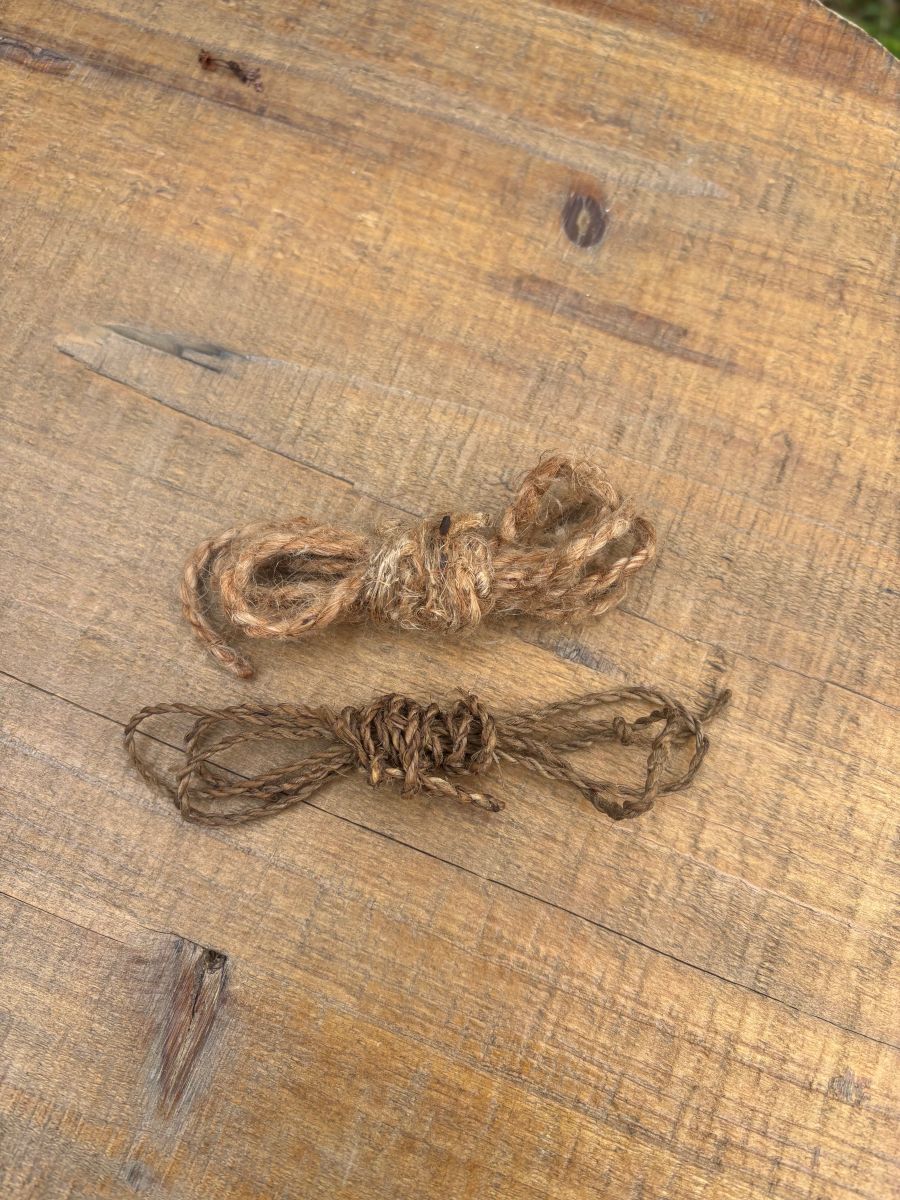
Wisteria: You either know this vine for its large purple drooping flower or being one of the most destructive, tree-killing invasives on the east coast. What you might not know is that the vines hold an incredibly strong inner fiber.
Where to find it: ANYWHERE. Roadsides, forests, suburban parks, your backyard. This stuff is incredibly invasive. I find that the ground runners work best but whenever I can I try to cut wisteria off from trees.
How to process it: After cutting down the vine,I find that the easiest and fastest way to process the fibers is by making two shallow cuts at the cut end with a pair of clippers in an X pattern. This allows you to get your fingernail under the bark and start peeling. Once you’ve finished peeling, you can scrape away the outer bark with a knife and then separate the fibers lengthwise.
Dogbane: If you were a Native American living here 1000 years ago, this would be your fiber of choice. Dogbane( also called Indian hemp due to its use in ropemaking) is an incredibly widespread perennial plant native to North America. Due to this and the high tensile of its fiber, dogbane was used for everything from bowstrings to nets to bags on this continent. All parts of the plant are highly toxic when ingested to most animals including humans by way of the cardiac glycoside, apocynamarine, which can cause cardiac arrest. But unless you plan on eating your rope, this is not a concern.
Where to find it: Dogbane likes wet soil and direct sunlight. Look in open fields, hillsides, and weedy roadsides. Dogbane is best harvested dead in the fall. I like to clip off any branches off the stem for easier transport, I always leave the seed pods in tree branches to help the seed better disperse.
How to process it: Take the woody stem and crush it flat using either your hands or a hard surface/rock depending on the strength of the stem. Afterwards, split the stem down the middle, you will now have four segments. You then break the woody stem away from the fibers in one direction and peel away in the opposite direction. For a finer cordage you can remove the outer red bark from the inner fibers, the easier way to do this is just by rubbing the fiber in your hands.
Pawpaw: The pawpaw may be the ultimate survival tree. This small understory tree is native to most of the southeast and has become increasingly popular with foragers and gardeners The pawpaw fruit is high calorie and packed with nutrients, the wood makes for an amazing friction kit, and the inner bark makes for an incredible cord.
Where to find it: Pawpaws grow in rich moist soil, I commonly find them on the slopes of floodplains, creeks, and marshlands. Something to note is that pawpaws grow in a type of grove called a clonal colony; meaning you can usually find dead standing trees among the living ones.
How to process it: I look for dry standing dead pawpaw trees, ideally the bark should peel right off the wood. You can then simply peel the inner fiber away from the bark. Another possibility is collecting the bark green and retting it in water. Retting is the process of separating fibers by way of a controlled rot. This should be done for at least a day but your results may vary.
Now those were just a few plants I have experience with in the area but there are dozens more! Some that I would also look out for include: Evening Primrose, Stinging nettle, marsh mallow, and Milkweed. So get out, explore, learn a new plant and twist some cord!
BLOG Post was submitted by our field instructor Ben Kamm
As we enter the time of Lunasa, the ancient Celtic festival of late summer, we’re invited to pause and honor the Celtic god Lugh- known for his craftsmanship skills – as well as celebrate the harvest present at this time of the year. This seasonal shift is a gentle reminder to slow down and feel gratitude for the gifts the Earth so generously provides. It’s a time to reflect on the collective impact we’ve had on the land, and to recommit to connecting with and caring for her.
There’s a certain shift in the air now — the light lingers just a little less each day, and the warmth in the air carries the heaviness of late summer. This slowing down that feels so present in the atmosphere invites us to move with more pause, and more mindfully.
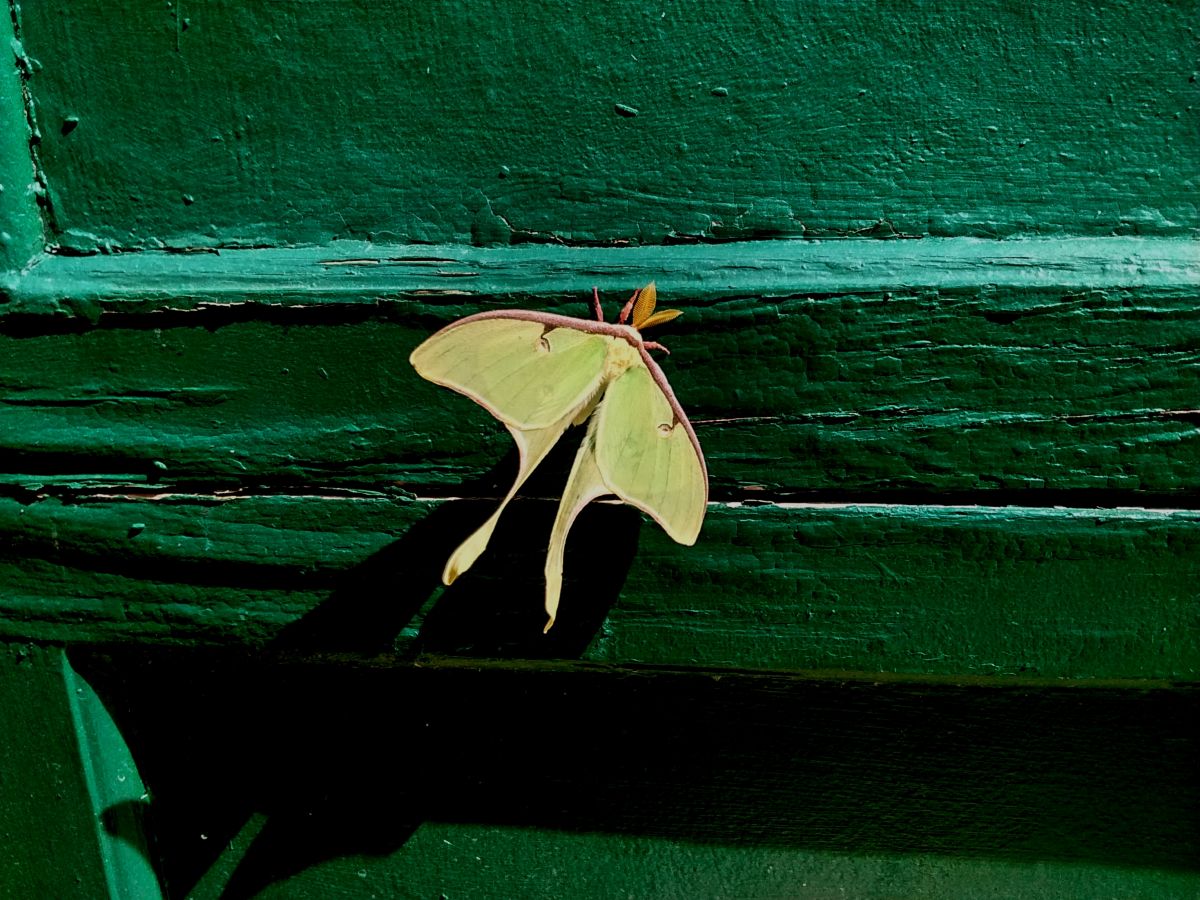
Yesterday, during a walk in between “running errands”, I had an unexpected encounter with a Luna Moth. I saw it lying in the hot grass ahead of me and it appeared to be struggling. I sat down beside it and it crawled onto me. It seemed to get much calmer in my presence. I noticed a small tear in its wing and made a little shelter for it near an enormous oak tree a few feet from where I found it lying in the blazing heat. That moment of connection that I would like to believe was mutually beneficial- it certainly lifted my spirits to be in the presence of this beautiful being(!)- is something I know I would have missed had I been rushing, distracted by my phone, or focused only on getting to my next destination.
Lunasa offers us this gift: the chance to slow down – and by doing so, move through our days with more awareness, giving us a chance to reconnect with the beauty and other life forms present here on Earth. Lunasa is an invitation to notice the subtle signs of abundance, creation, and beauty all around us.
As a way to honor Lugh during this time, the Celtic god of Craftsmanship, consider this an invitation to return to a favorite ancestral primitive skill that you may have set aside during the busy rush of earlier summer days.
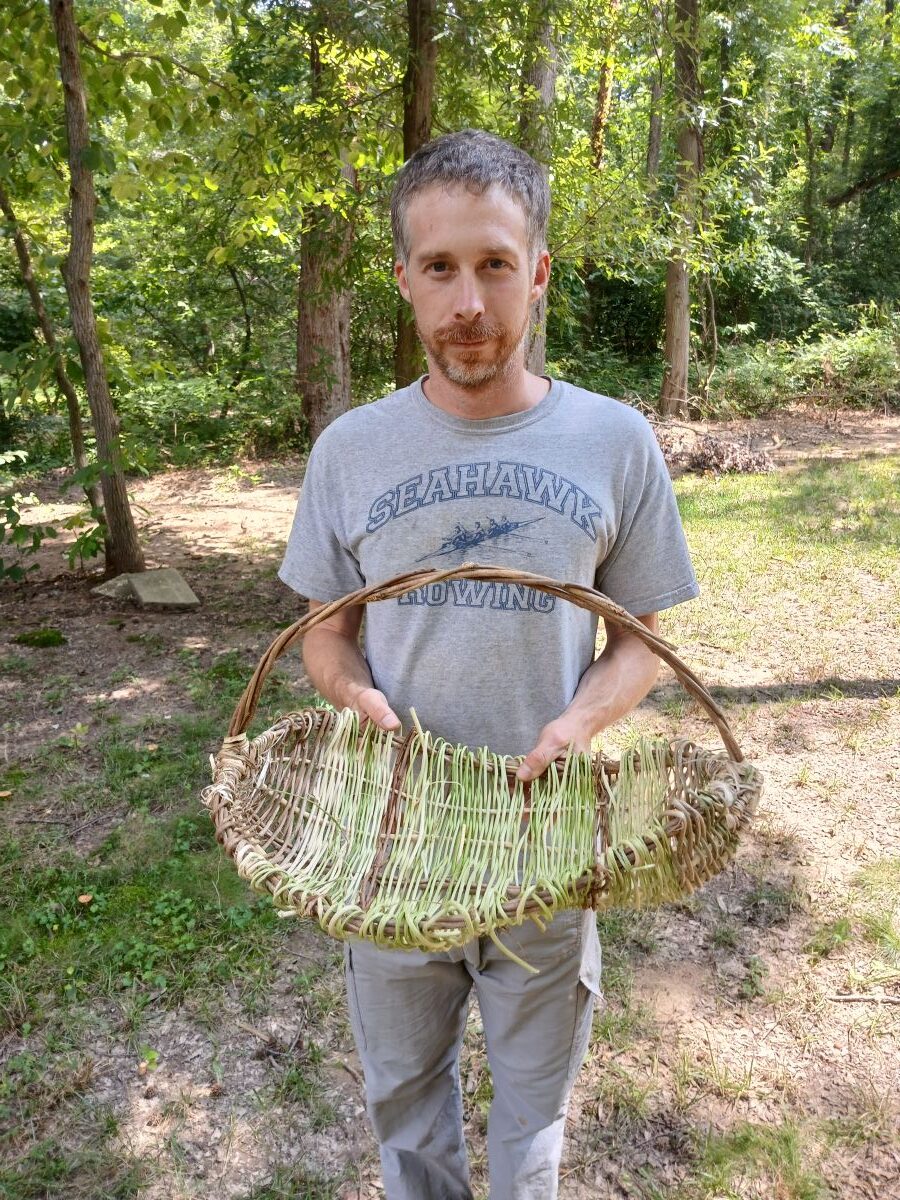
One skill that comes to mind is basket-weaving. Cattails are now ripe for harvesting, and perfect for weaving baskets — a meaningful, satisfying, and ancient skill that can not only strengthen our connection to the plants and landscape that surround us, but also to our history as humans living in connection and harmony with nature.
In addition to slowing down and cultivating or revisiting an ancient earth skill such as basket weaving, another beautiful and simple way to celebrate this time of Lunasa is by gathering the wine berries and black berries that are ripening now – another sign of the sweetness and abundance that nature provides – and share these with friends.
A favorite activity I love doing with the kids in our programs is making fresh jam from these berries and serving it with Ash Cakes cooked on an open fire – “breaking bread” and sharing the abundance found in nature together. This to me feels like one perfect and simple way to celebrate this special time.
Over the next few weeks, I’ll be on the look out to harvest more berries and cattails to use in our upcoming homeschool programs.
If you’d like to learn more about our homeschool programs or join us for a weekend workshop, check out all of our offerings here.
I look forward to slowing down and really appreciating all that the Earth provides with you and your families this coming season.
Blog post submitted by our field instructor – Laura Rose